

What’s That: Diesel Fuel Additives
The quality of diesel fuel affects more than engine performance. It can influence maintenance costs, equipment reliability, and how efficiently your operations run. Even diesel that meets industry specifications may benefit from diesel fuel additives to address specific operating conditions, storage challenges, or performance requirements.
Fuel additives are chemical treatments designed to improve specific fuel properties, protect engine components, or preserve fuel quality during storage. From preventing corrosion and controlling deposits to improving cold-weather performance, each additive serves a different purpose. Understanding how they work and when to use them can help you make more informed decisions about your fuel management strategy.
What Are the Different Types of Diesel Fuel Additives?
Fuel additives are typically blended into fuel in small, carefully measured amounts at refineries, distribution terminals, or bulk storage facilities. They can also be added directly to fuel tanks, depending on the application. Each additive serves a specific purpose, from improving fuel stability and protecting against corrosion to enhancing cold-weather performance.
Common types include:
- Cold-flow improvers: Modify wax crystals to help diesel pass through filters at lower temperatures.
- Pour point depressants: Lower the temperature at which diesel loses its ability to flow.
- Anti-icing additives: Help reduce ice-related restrictions in fuel systems.
- Demulsifiers: Help separate water from fuel so it can be removed.
- Detergents: Reduce deposits that accumulate in fuel injectors and other components.
- Cetane improvers: Improve ignition quality, which may support cold-start performance.
- Lubricity improvers: Reduce friction and wear in fuel pumps and injection equipment.
- Stabilizers and antioxidants: Slow fuel degradation during extended storage.
- Biocides: Control microbial contamination when needed.
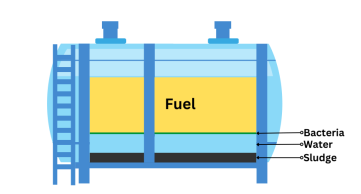
Not every fuel requires the same treatment. Additive effectiveness depends on fuel composition, dosage, and application temperature. Additives also cannot reliably correct severely contaminated or degraded fuel. If water, sludge, or sediment has accumulated in your tank, professional tank cleaning and fuel polishing may be necessary to restore fuel quality. In cases of significant fuel degradation, replacing the affected fuel may be the safest and most effective solution.
How Does Cold Weather Affect Diesel Fuel?
Diesel naturally contains paraffin wax. In cold weather, wax crystals begin forming and may accumulate in filters, restricting fuel flow to the engine. This is commonly called diesel gelling.
Three measurements help explain cold-weather fuel performance:
- Cloud point: The temperature at which wax crystals first become visible in diesel.
- Pour point: The lowest temperature at which fuel still shows movement under specified laboratory test conditions. This temperature is specific to the fuel and does not guarantee it will flow through an engine’s filters.
Diesel may continue flowing from a storage tank even when wax crystals begin clogging filters. As the restriction increases, less fuel reaches the engine, potentially causing reduced power, difficulty starting, or a complete shutdown.
Water creates another concern. Moisture in storage tanks may freeze, blocking fuel lines or filters. Biodiesel blends also require attention. According to the National Renewable Energy Laboratory’s Biodiesel Handling and Use Guide, biodiesel’s cold-flow properties depend on its feedstock, making fuel composition important when preparing blends for winter.
Some suppliers blend No. 1 diesel (kerosene) with No. 2 diesel to improve cold-weather performance. Kerosene blending may be needed during extreme cold when additives alone cannot provide sufficient protection. Additives can complement winter blending, but the appropriate blend and treatment depend on the fuel’s properties and expected temperatures. For more on when to use each option, read Mansfield’s Additives vs. Kerosene: Don’t Pick the Wrong Winter Fix.
Treatment timing matters. Cold-flow additives generally work best before wax begins crystallizing. Mansfield’s ColdPRO winter diesel additive is formulated to provide fuel operability down to -20°F when properly blended. For fuel that has already gelled, Mansfield also offers an Emergency Reliquifier designed to restore fuel to a liquid state. Both products should be used according to their application instructions.
Why Diesel Fuel Additives Matter
The EIA’s October 2026 Winter Fuels Outlook forecasts national temperatures similar to last winter, but regional conditions differ. The West is expected to experience 25% more heating degree days than last year, while the Midwest has the highest projected total.
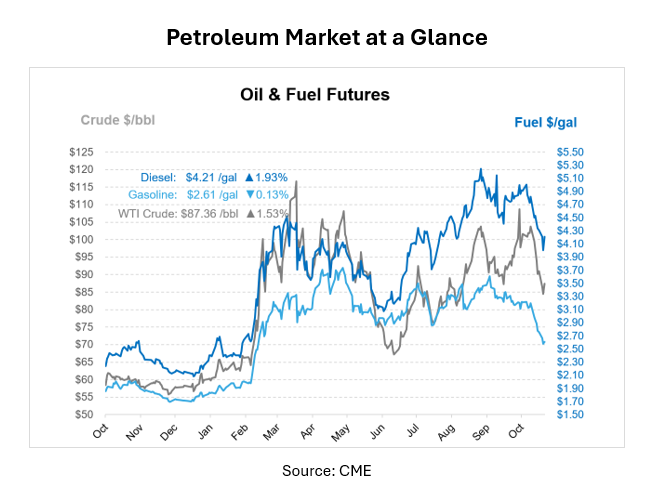
The forecast also comes as distillate inventories remain tight. According to the EIA’s October Short-Term Energy Outlook, East Coast distillate inventories were 32% below their five-year seasonal average in September. As of October, EIA expected inventories to remain around 20% below average through winter.
When supplies are limited, replacing fuel during a winter storm may be more difficult, particularly if transportation is disrupted. Preventive treatment helps businesses reduce the risk of fuel-related downtime and unexpected delivery needs.
Preparing Your Fuel for Winter
Before freezing temperatures arrive, confirm your fuel’s cold-weather specifications and inspect storage tanks for water. Keep replacement filters available and pay particular attention to biodiesel blends or fuel stored in equipment that operates infrequently. Follow the additive manufacturer’s recommended dosage and timing.
Mansfield’s Fuel Quality & Diesel Additives program offers winter treatments, fuel testing, and storage maintenance services. Businesses can request a complimentary fuel quality consultation to review their fuel conditions and determine whether additional winter treatment is needed.
This article is part of Daily Market News & Insights


MARKET CONDITION REPORT - DISCLAIMER
The information contained herein is derived from sources believed to be reliable; however, this information is not guaranteed as to its accuracy or completeness. Furthermore, no responsibility is assumed for use of this material and no express or implied warranties or guarantees are made. This material and any view or comment expressed herein are provided for informational purposes only and should not be construed in any way as an inducement or recommendation to buy or sell products, commodity futures or options contracts.