

Global Oil Production Is Recovering. What Does That Mean for Fuel Supply?
Global oil production is improving across several major producing regions, bringing additional crude supply to a market still facing transportation and refining challenges. Production in the Middle East is recovering from earlier disruptions, U.S. output is on track for another record year, and Russian production estimates show signs of improvement.
While these developments support global oil availability, the amount of diesel and gasoline reaching fuel buyers still depends on how efficiently crude is processed through refineries and distributed through networks.
Middle East Production Recovers as Shipping Challenges Continue
Oil production across several Middle Eastern countries has improved following disruptions earlier this year. According to Reuters, OPEC crude production increased by approximately 1.38 million barrels per day in October, reaching 22.87 million barrels per day.
That brought production among the group’s 11 members to approximately 90% of levels recorded before the conflict involving Iran. Saudi Arabia, Kuwait, and Iraq contributed to the recovery.
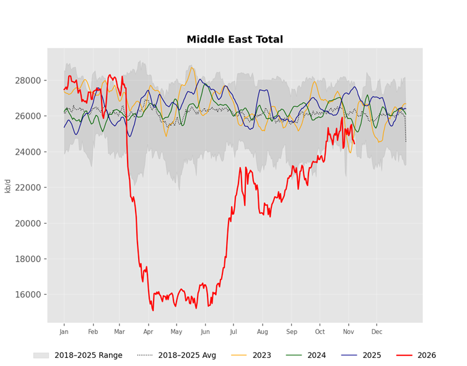
Despite the improvement, transportation remains a challenge. The supplied market report describes continued disruptions around the Strait of Hormuz and restrictions affecting Iranian shipping routes. Even when producers increase output, limited shipping access can delay deliveries and restrict how much crude reaches international markets.
U.S. Production Adds to Global Supply
While Middle Eastern production continues to recover, growth in the United States is adding another source of supply to the global market. According to the U.S. Energy Information Administration (EIA), U.S. crude production is forecast to average approximately 13.9 million barrels per day in 2026, compared with 13.7 million barrels per day in 2025.
Much of the growth is concentrated in the Permian Basin in Texas and New Mexico, along with offshore developments in the Gulf of America. EIA reported that production averaged 13.7 million barrels per day during the first half of 2026, approximately 2% higher than the same period in 2025.
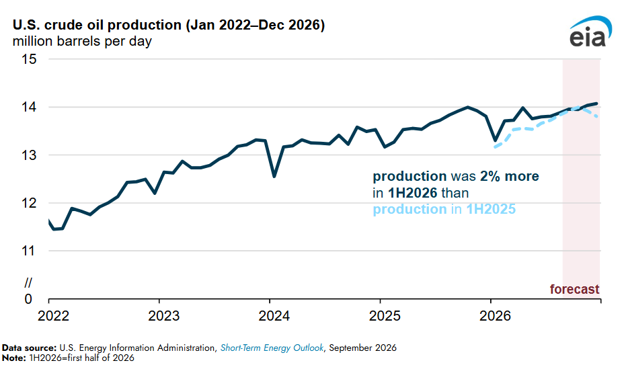
Higher crude prices have supported drilling activity in the Permian, while new offshore projects have added production capacity. EIA identified Shenandoah, Ballymore, Whale, and Salamanca as four developments contributing to increased output in the Gulf of America.
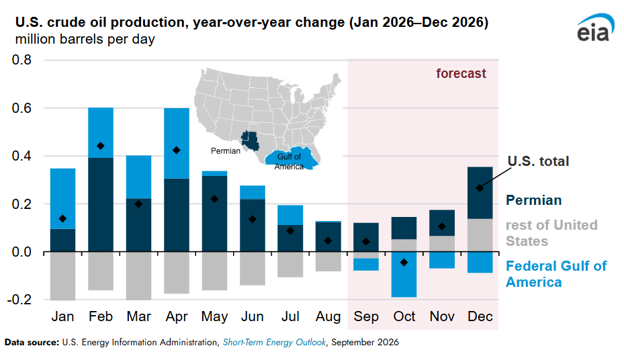
These production gains provide another source of crude as international markets work through supply disruptions, helping strengthen overall supply even as refining and distribution constraints remain.
Russian Production Improves, but Refining Challenges Remain
Russia’s oil production has also shown signs of recovery following declines during the second half of 2026. The production estimates included in the supplied market report show output increasing in early November after several months of lower production.
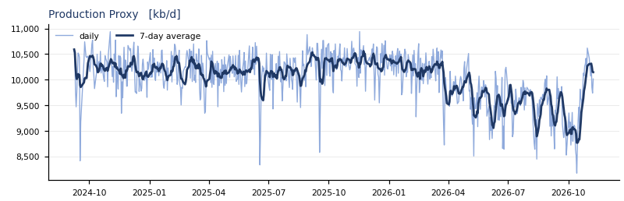
At the same time, reported attacks on Russian energy infrastructure continue to raise concerns about refining operations. The supplied report describes incidents involving the Kirishi and Ryazan refineries, which could affect the country’s ability to process crude into finished petroleum products.
Russia’s situation illustrates why crude production and refined fuel supply do not always move together. Higher oil output may improve crude availability, but refinery disruptions can still constrain diesel and gasoline production.
What Production Improvements Mean for Fuel Markets
Taken together, production gains in the Middle East, United States, and Russia are helping support global crude supply. However, each region faces different challenges that influence how much oil ultimately reaches consumers.
For commercial fuel buyers, shipping restrictions can delay oil deliveries, refinery outages can reduce finished fuel output, and regional inventories determine how much supply is available when demand increases.
These factors become especially important heading into winter, when heating oil demand can add pressure to distillate supplies shared with diesel markets. As 2026 comes to a close, developments around the Strait of Hormuz, Russian refining operations, and U.S. production growth will remain important indicators for fuel markets.
For fleets and businesses, improving global crude production is encouraging, but it does not eliminate the risk of regional fuel supply disruptions. Monitoring diesel inventories, refinery conditions, and transportation constraints, while planning deliveries ahead of potential disruptions, can help reduce exposure to sudden supply tightness.
This article is part of Daily Market News & Insights
Tagged:


MARKET CONDITION REPORT - DISCLAIMER
The information contained herein is derived from sources believed to be reliable; however, this information is not guaranteed as to its accuracy or completeness. Furthermore, no responsibility is assumed for use of this material and no express or implied warranties or guarantees are made. This material and any view or comment expressed herein are provided for informational purposes only and should not be construed in any way as an inducement or recommendation to buy or sell products, commodity futures or options contracts.