What’s That: Suez Canal
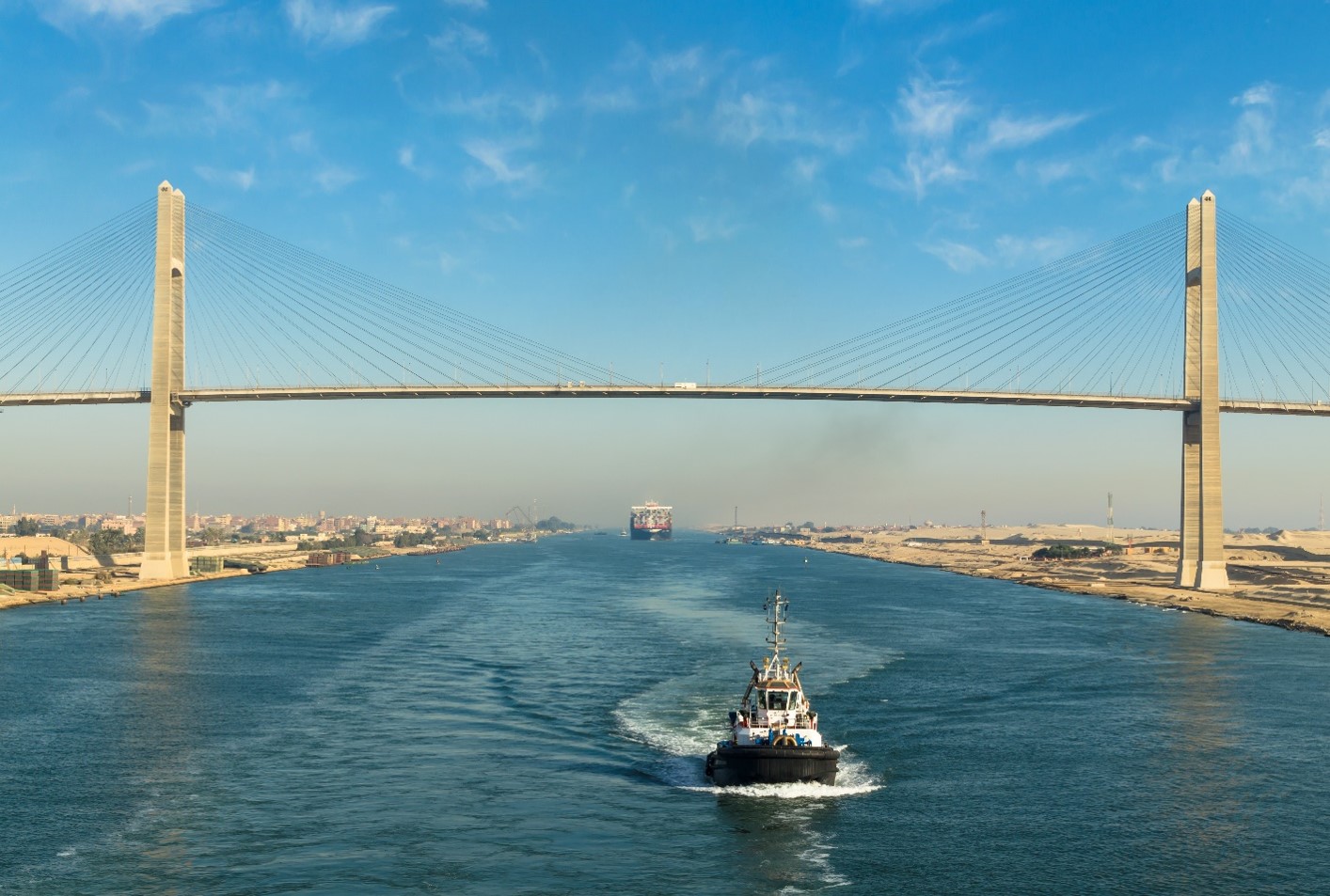
The Suez Canal is one of the world’s most important shipping routes, connecting the Mediterranean Sea with the Red Sea and providing a direct maritime link between Europe and Asia. For energy markets, the canal is an important route for crude oil, refined fuels, liquefied natural gas, and other commodities moving between major producing and consuming regions.
Its importance becomes especially clear when ships cannot use it. The main alternative is sailing around Africa’s Cape of Good Hope, adding distance, transit time, fuel consumption, and shipping costs. The Suez Canal has historically handled around 10% to 15% of global trade, but recent Red Sea disruptions have sharply reduced traffic. UN Trade and Development (UNCTAD) reported that by May 2025, tonnage through the canal remained 70% below 2023 levels as many vessels continued to reroute around Africa’s Cape of Good Hope.
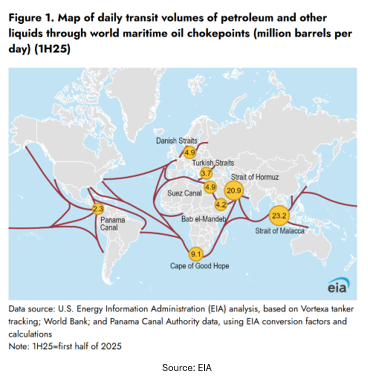
According to the EIA, about 4.9 million b/d of crude oil and petroleum products transited the Suez Canal and SUMED pipeline in the first half of 2025, while an estimated 4.2 million b/d transited the Bab el-Mandeb Strait. Both volumes were approximately half of 2023 levels.
Where Is the Suez Canal?
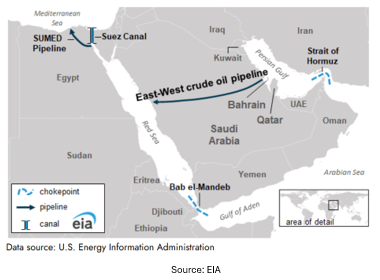
The Suez Canal runs north to south across Egypt’s Isthmus of Suez, connecting the Mediterranean Sea near Port Said with the Red Sea near the city of Suez. According to the Suez Canal Authority, the canal stretches approximately 193.3 kilometers (about 120 miles) and reaches a maximum water depth of 24 meters. A typical vessel takes approximately 12 to 16 hours to transit the canal.
Unlike the Panama Canal, the Suez Canal does not rely on locks to raise or lower vessels. It is a sea-level waterway, allowing ships to travel directly between the Mediterranean and the Red Seas.
The canal is also part of a larger shipping corridor. Vessels traveling south eventually reach the Bab el-Mandeb Strait, which connects the Red Sea with the Gulf of Aden and the Indian Ocean. As discussed in Mansfield’s earlier What’s That: Bab el-Mandeb Strait article, disruptions at either location can affect traffic throughout the corridor.
Suez Canal Quick Facts
- Location: Egypt
- Connects: The Mediterranean Sea and Red Sea
- Length: Approximately 193 km (120 miles)
- Transit Time: 12-16 hours
- Key Cargo: Crude oil, refined fuels, liquefied natural gas (LNG), and containerized goods
- Alternative Route: Cape of Good Hope, South Africa
These characteristics make the Suez Canal one of the world’s most important maritime chokepoints, influencing trade flows, shipping costs, and energy markets around the globe.
Why Does the Suez Canal Matter?
The Suez Canal plays an important role in keeping global energy supplies moving efficiently. Crude oil, refined petroleum products, LNG, and other commodities regularly pass through the waterway, making it a key connection between producers and consumers across the Middle East, Europe, and other markets.
Because so much trade is concentrated along this corridor, changes in canal traffic can have effects beyond Egypt. When fewer vessels are able or willing to use the route, shipping capacity can become tied up for longer periods, and normal supply patterns may shift as traders and suppliers adjust where and how products are delivered.
How Does the Suez Canal Impact Global Energy Markets?
Recent events have shown that the Suez Canal’s importance extends beyond the canal itself. Security threats around the Bab el-Mandeb led many shipping companies to avoid the Red Sea and reroute vessels around the Cape of Good Hope, contributing to significant declines in Suez Canal traffic.
More recently, traffic has shown signs of returning. Reuters reported on August 10 that Maersk and Hapag-Lloyd were resuming additional services through the Red Sea and Suez Canal following earlier diversions around Africa. The Suez Canal is more than a shortcut on a map. It is part of the infrastructure that determines how efficiently energy moves between global markets.
This article is part of Daily Market News & Insights
Tagged: Crude Oil Shipping, Energy Chokepoints, energy market analysis, europe energy supply, fuel supply chain, global oil trade, Global Trade Routes, Maritime Shipping, Middle East Geopolitics, red sea chokepoint, Red Sea shipping, shipping chokepoints, shipping disruption, Suez Canal, supply chain risk


MARKET CONDITION REPORT - DISCLAIMER
The information contained herein is derived from sources believed to be reliable; however, this information is not guaranteed as to its accuracy or completeness. Furthermore, no responsibility is assumed for use of this material and no express or implied warranties or guarantees are made. This material and any view or comment expressed herein are provided for informational purposes only and should not be construed in any way as an inducement or recommendation to buy or sell products, commodity futures or options contracts.