
Emergency Fuel Planning: Questions Every Business Should Ask About Backup Power
When the power goes out, having a generator is only part of the emergency plan. Businesses also need to know how long that generator can run, whether the fuel on site is usable, and how quickly it can be resupplied if an outage lasts longer than expected.
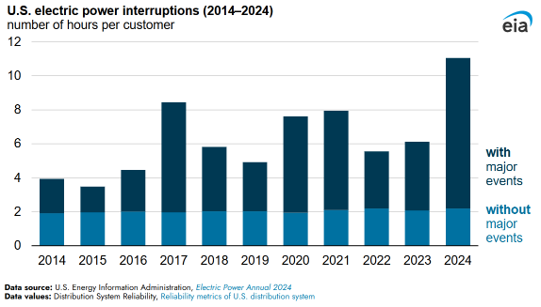
That planning is becoming more important. According to the U.S. Energy Information Administration (EIA), U.S. electricity customers experienced an average of 11 hours of power interruptions in 2024, nearly double the previous decade’s average. Major events such as Hurricanes Beryl, Helene and Milton caused 80% of the hours customers spent without power that year.
According to the Federal Emergency Management Agency (FEMA), 40% of businesses never reopen after a natural disaster, and another 25% close within one year. That makes backup power planning a business continuity issue, not just a facilities concern.
How Long Will Backup Power Last?
Generator runtime depends on three things: generator size, electrical load and available fuel. Some businesses plan for 24 to 72 hours of backup power, while critical facilities such as hospitals, emergency operations centers and data centers often plan for several days or longer. The most important step is understanding how much fuel the generator burns per hour under realistic emergency conditions.
Businesses should also identify which systems truly need to stay online. Reducing non-essential electrical loads can significantly extend runtime and help stretch available fuel during a prolonged outage.
How Much Diesel Do You Have on Site?
Many organizations store diesel on site, but not all know whether current inventory is enough to support an extended outage.
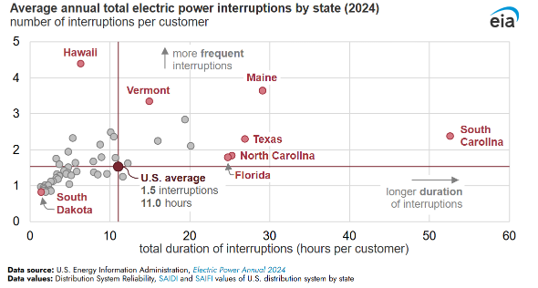
The right amount depends on the facility’s critical power needs, location, outage risk, tank capacity and access to emergency fuel deliveries. Coastal, remote or storm-prone locations may need larger inventories because roads, terminals and delivery routes can be disrupted after major weather events. The EIA reported that South Carolina customers experienced nearly 53 hours without power on average in 2024, the highest of any state that year, largely due to Hurricane Helene’s impact on transmission and distribution infrastructure.
During a regional emergency, fuel demand can rise quickly from hospitals, utilities, municipalities, data centers and other critical operations. Businesses should know who is authorized to order fuel, how much runtime remains in the tank, and how quickly emergency deliveries can reach the site.
Is the Fuel in the Tank Ready to Use?
Having diesel in storage does not always mean the fuel is ready for an emergency.
Diesel can often be stored for 12 months or longer under clean, dry conditions, but water, temperature changes, contamination and oxidation can reduce fuel quality over time. Aging or contaminated fuel can plug filters, create sludge, corrode tanks and affect generator performance.
In a 2016 notice, the U.S. Environmental Protection Agency (EPA) reported that 35 of 42 diesel underground storage tank systems inspected, or 83%, showed moderate or severe corrosion, and fewer than 25% of tank owners were aware of corrosion before internal inspection.
Water contamination is one of the most common threats to stored fuel quality. Even small amounts of water can create conditions for microbial growth, sludge and corrosion. Our recent article, Water Contamination in Fuel Storage Tanks: Causes, Detection and Prevention, takes a closer look at how water enters storage tanks and the steps businesses can take to protect their fuel supplies.
That is why businesses should regularly test fuel, monitor tank levels, check for water, inspect tanks and schedule fuel polishing or tank cleaning when needed. The real question is not only “Do we have fuel?” but “Do we know the condition of the fuel we have?”
Building a More Resilient Backup Power Strategy
Backup power planning is no longer just about owning a generator. It requires a clear understanding of fuel supply, fuel quality, runtime, delivery logistics and extended outage risks.
Mansfield Energy, North America’s leading fuel distributor, brings a wealth of expertise to the table in creating a robust emergency response program tailored to your company’s needs. With an extensive network serving the US and Canada, Mansfield understands the critical importance of proactive measures to address potential disruptions from hurricanes and other natural disasters.
Leveraging in-depth knowledge, Mansfield has developed a comprehensive Emergency Response Fuel Program that prescribes industry best practices. Mansfield’s program enables a multi-faceted approach, prioritizing essential services and collaborating closely with partners to ensure seamless fuel distribution during emergencies. Contact us today!
This article is part of Daily Market News & Insights


MARKET CONDITION REPORT - DISCLAIMER
The information contained herein is derived from sources believed to be reliable; however, this information is not guaranteed as to its accuracy or completeness. Furthermore, no responsibility is assumed for use of this material and no express or implied warranties or guarantees are made. This material and any view or comment expressed herein are provided for informational purposes only and should not be construed in any way as an inducement or recommendation to buy or sell products, commodity futures or options contracts.