
Oil Markets Are Swinging Wildly. Is It Time to Lock in Fuel Prices?
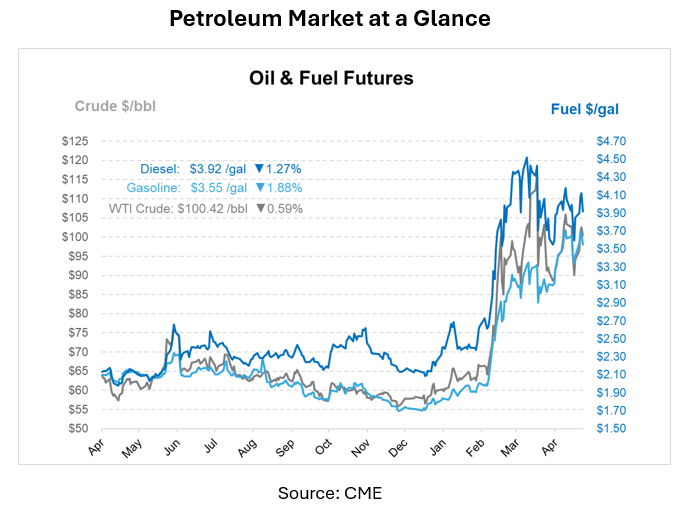
One headline out of the Middle East can now move oil markets within minutes, and that is exactly why fixed-price fuel strategies can be a smart way for companies to protect themselves against volatility. Over the past several months, the Iran war has created some of the most unpredictable trading conditions seen in years, with crude prices reacting sharply to tanker attacks, military strikes, sanctions on Iranian exports, and threats involving the Strait of Hormuz.
On many days, oil prices moved by more than $5 per barrel in a single session before reversing course on ceasefire rumors or diplomatic headlines. For businesses that rely heavily on fuel, these sharp swings are making budgeting increasingly difficult and placing greater focus on strategies that provide cost certainty.
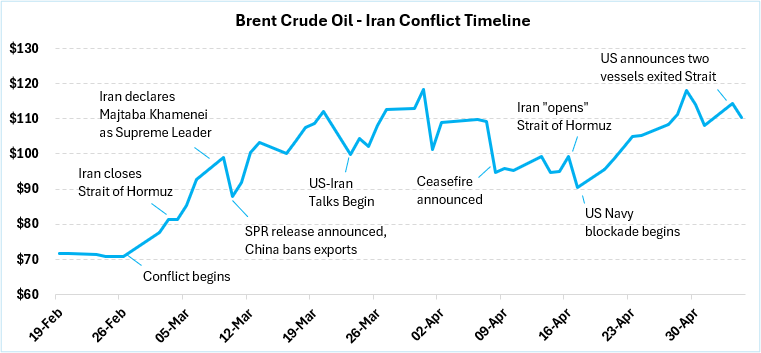
Diesel markets have remained especially sensitive throughout the conflict. According to the EIA, U.S. crude inventories fell by 4.3 mmbbls for the week ended May 8, exceeding expectations for a 2.0 mmbbl draw, while inventories at Cushing declined by 1.7 mmbbls. The EIA also reported a gasoline draw of 4.1 mmbbls and a distillate draw of 0.2 mmbbls, compared to estimates of 2.9 mmbbls and 2.7 mmbbls, respectively. This has created an environment where diesel markets can remain volatile even during temporary pullbacks in crude oil prices.
What the Forward Curve Is Signaling
The structure of the forward curve is sending an important signal to fuel buyers. Oil markets remain backwardated, meaning prompt (next-month) prices continue trading above future months as buyers place a premium on immediate supply availability. In simple terms, the market is pricing in near-term supply risk.
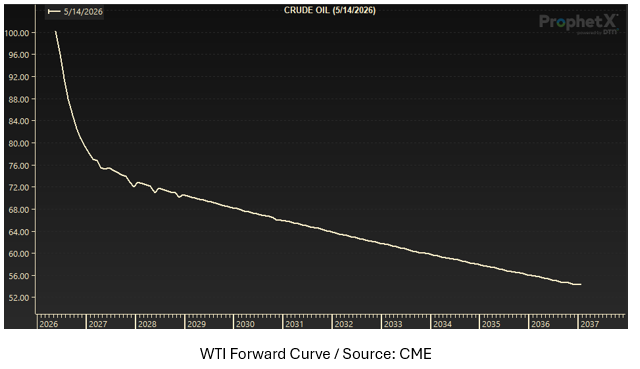
At the same time, outer months on the curve have gradually moved higher as the longer supply concerns remain unresolved. Refined products and crude inventories continue to tighten while uncertainty around future supply flows persists. What initially appeared to be a short-term disruption is now beginning to influence pricing expectations for 2027 and beyond.
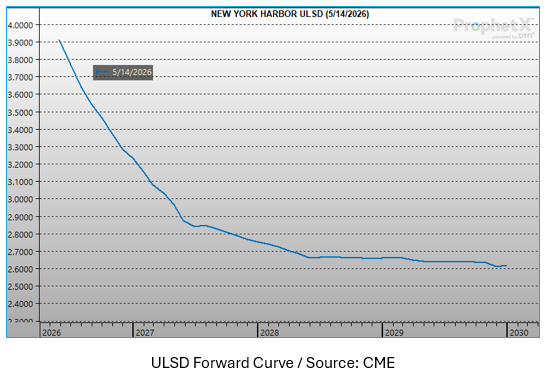
It is important to note that the current market structure presents both risk and opportunity. When you combine geopolitical risk with a backwardated market structure, businesses have opportunities to secure future pricing below current spot levels while also protecting themselves from additional volatility.
One way to visualize the current opportunity is to compare today’s forward pricing levels with periods of extreme volatility, such as 2022. If market conditions in 2026 continue resembling the disruptions experienced during that period, today’s fixed-price opportunities could look increasingly attractive in hindsight.
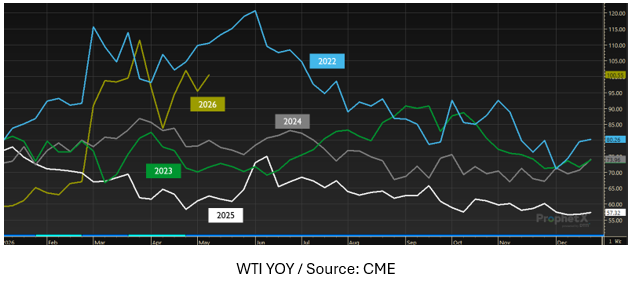
Why Fixed-Price Strategies Matter
Fixed-price fuel strategies help reduce uncertainty by allowing businesses to lock in pricing ahead of time rather than remaining exposed to daily market volatility.
In today’s market, that opportunity becomes even more important because backwardation continues to allow many future months to trade below current spot prices. While near-term prices remain elevated because of geopolitical fears, businesses may still have opportunities to secure more favorable pricing further out on the curve before additional volatility pushes those levels higher.
Fixed-price agreements can also support broader business planning. More predictable fuel costs can help companies improve budgeting, forecast cash flow more accurately, manage margins, and bid more confidently on long-term contracts.
Planning Ahead in a Volatile Market
The current market environment is another reminder that volatility is not just about higher prices; it is about unpredictability. Even when broader supply forecasts appear stable, some events can rapidly change market sentiment and pricing direction.
For businesses that depend heavily on fuel, having a proactive fuel purchasing strategy can make a major difference during periods like this. Whether you are looking to reduce budget uncertainty, manage exposure to volatility, or take advantage of opportunities created by backwardated markets, fixed-price strategies remain an important tool for navigating today’s energy market.
With Mansfield Fuel Price Risk Management services, you can plan for the unexpected and mitigate the impact of these events on your bottom line. Protect your business against fuel price fluctuations and ensure cost stability.
Our Price Risk Management experts will analyze your buying history and organizational goals to provide an assessment of your current fuel spending, a forecasted outlook, and recommendations. Contact us today!
This article is part of Daily Market News & Insights


MARKET CONDITION REPORT - DISCLAIMER
The information contained herein is derived from sources believed to be reliable; however, this information is not guaranteed as to its accuracy or completeness. Furthermore, no responsibility is assumed for use of this material and no express or implied warranties or guarantees are made. This material and any view or comment expressed herein are provided for informational purposes only and should not be construed in any way as an inducement or recommendation to buy or sell products, commodity futures or options contracts.