

Rising Lubricant Prices: What’s Behind the Shift?
For the latest updates on the Iran conflict and its impact on fuel, DEF, and lubricant markets, visit our Iran Market Update page.
The conflict with Iran has brought tremendous pressure across the oil industry. From nat gas and crude oil to gasoline, diesel, and lubricants – the reduction of traffic through the Strait of Hormuz has had significant price impacts for fleets. That’s particularly true of the lubricants market. Across virtually all lubricants suppliers, the cost of motor oil and other lubricants has risen.
So, what’s happening in lubricants markets currently – what is driving the higher prices, and why are so many suppliers making price increases right now?
What’s Happening with Lubricant Prices
Nearly all lubricants suppliers have increased prices over the last 45 days, reacting to similar market pressure. Industry newsletter JobbersWorld reported that a combined 22 price increases have been announced by 17 suppliers. The increase varied from 12%-35% increases, which most increases closer to the midpoint of that range.
While lubricant price increases tend to move a bit slower, the recent wave has been much more tightly aligned. The announcements have also had unusually short lead times, with changes going into effect much sooner than typical. Among independent manufacturers, who carry less inventory than the major producers, price increases have been effective within 1-2 weeks – and for some even less. All this is unsurprising given the massive surge in crude oil prices and resulting cost pressure.
Rising Production Costs
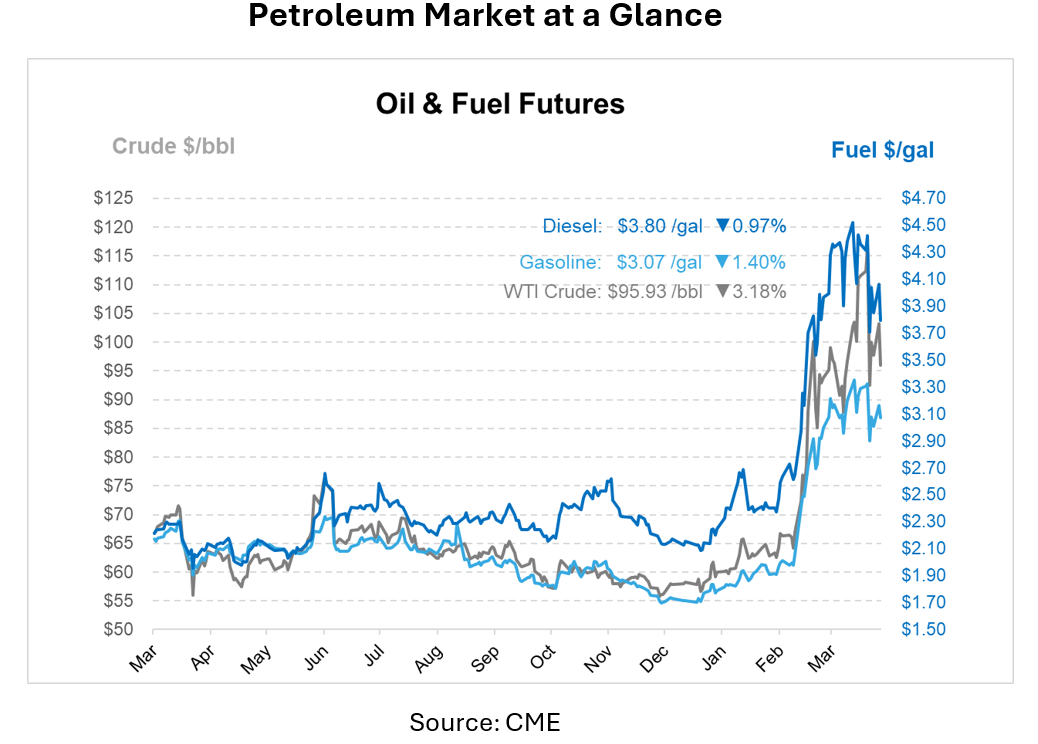
The major factor behind the lubricant price increases is crude’s rise. The US-Iran conflict has effectively shut down the Strait of Hormuz, through which 20% of the world’s oil typically passes. As a result, crude oil prices are up 40% higher than pre-conflict levels.
Beyond just the current price increases, lubricants manufacturers must weigh the future of oil markets. It’s unclear how high prices will go and how long the market will be elevated – meaning more uncertainty and cost concerns that lubricants producers have to consider.
Moreover, fuel market concerns increase the profit margins refiners make by producing products like jet fuel and diesel. Market incentives therefore lead refiners to deprioritize motor oil portions of the stack as they maximize their fuel output.
From Crude Oil to Base Oils
Lubricants are derived primarily from base oils, which are refined from crude oil. As crude prices rise, base oil production costs increase almost immediately. This dynamic has been especially pronounced in recent weeks as refiners face higher feedstock costs alongside constrained logistics and tighter supply availability.
The Middle East conflict has triggered structural disruption in the global base oils market, with shortages emerging overseas across multiple base oil groups. Blenders are facing simultaneous pressure from higher crude costs, reduced base oil availability, and increased freight expenses; a combination that leaves little room to absorb rising costs internally.
Additives and Logistics Add to the Pressure
Base oils are only one part of what ultimately drives lubricant costs. Additives, such as antioxidants, detergents, and viscosity modifiers, are also components of finished lubricants, and their supply chains can be affected when regional instability disrupts trade flows. Many additive raw materials still move through the same shipping corridors that may face delays, higher insurance costs, and rerouting expenses.
At the same time, transportation costs can rise. When shipping companies avoid higher-risk routes or send vessels along longer paths, freight rates often climb. These logistical pressures can lengthen delivery times and increase working capital requirements across the supply chain, potentially tightening availability and raising overall costs.
Market Impact: Price Adjustments Across the Industry
Together, higher crude prices, constrained base oil supply, additive availability issues, and increased logistics costs are driving lubricant price increases across the market. Many lubricant manufacturers have already announced price adjustments, with additional increases likely if volatility persists.
While the exact magnitude and duration of price pressure will depend on how geopolitical tensions evolves, market participants are operating under continued uncertainty. Even in scenarios where tensions ease, the cost increases already absorbed by the supply chain may take time to unwind.
What This Means for You
For end users, rising lubricant prices are a reflection of broader energy market dynamics rather than isolated supplier actions. Lubricants are closely tied to global crude and refining flows, meaning disruptions, whether driven by geopolitical conflict, logistical constraints, or market uncertainty, can quickly translate into pricing pressure and supply variability.
In the near term, continued volatility is likely. As conditions shift, greater emphasis is placed on planning, supplier alignment, and operational efficiency to help manage cost exposure and maintain consistency across fuel and lubricant programs. At Mansfield, we are committed to closely monitoring commodity markets, providing clear, timely education, and delivering solutions that help navigate rising oil prices. Connect with a Mansfield energy market expert to stay informed on what’s happening across the energy sector.
Looking to follow the market more closely and stay up to date with daily changes? Visit our Market Update page for insights on current conditions, including developments surrounding the Iran conflict and the global energy market.
This article is part of Daily Market News & Insights
Tagged: Crude oil prices, fleet fuel costs, fleet maintenance costs, fuel and lubricant program, global oil supply, iran war, lubricant price increase, lubricant prices, Middle East conflict, oil market volatility, petroleum market outlook, Strait of Hormuz, Supply Chain Disruption, US Iran conflict


MARKET CONDITION REPORT - DISCLAIMER
The information contained herein is derived from sources believed to be reliable; however, this information is not guaranteed as to its accuracy or completeness. Furthermore, no responsibility is assumed for use of this material and no express or implied warranties or guarantees are made. This material and any view or comment expressed herein are provided for informational purposes only and should not be construed in any way as an inducement or recommendation to buy or sell products, commodity futures or options contracts.