
What’s That: Underground Storage Tank (UST) Components
Fuel tanks and stored fuel are the backbone of fuel storage and distribution at thousands of facilities nationwide. But what’s really happening beneath the surface? Every day, underground storage tanks (USTs) quietly hold millions of gallons of fuel out of sight, making their condition and maintenance more critical than most operators realize. Understanding what’s inside these tanks and how each component works is essential not just for regulatory compliance, but for protecting the environment, your business, and your reputation. In this article, we break down the key components of UST systems, highlight best practices for inspection and maintenance, and offer actionable insights for owners and operators.
What Is a UST System?
An underground storage tank system is designed to store regulated products (most commonly petroleum products) below ground. These systems typically consist of three primary components:
- The Tank: Where the fuel is stored.
- Integral Piping: Transfers fuel from the tank to dispensers.
- Fuel Dispensing : Deliver fuel to vehicles or equipment.
All USTs must be double-walled or installed within an approved secondary containment system to minimize the risk of leaks and environmental contamination.

UST Components Explained: The Breakdown
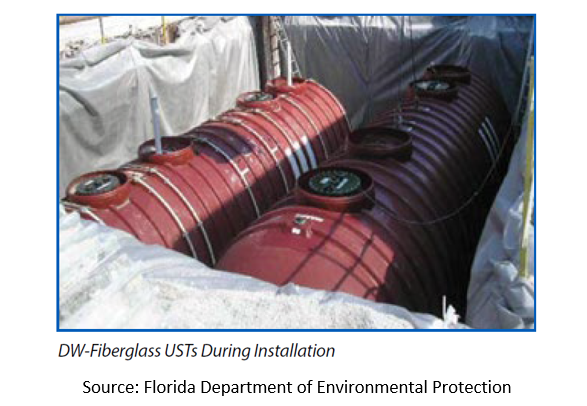
- Double-Walled Tanks
Modern USTs feature double-walled construction, often using fiberglass or steel. The space between the inner and outer walls (the “interstice”) is critical for leak detection. If a breach occurs, the interstice contains the leak and triggers monitoring systems before fuel can escape into the environment.
- Release Detection Devices
Release detection (RD) devices are the facility’s early warning system. These sensors monitor the interstice for signs of leaks. Facility operators must inspect these devices monthly and conduct annual operability tests to ensure they function as designed.
- Pump/Piping Sump
Located above the tank but below ground, the pump/piping sump houses the submersible turbine pump (STP), RD sensors, and pipe fittings. This area is a common site for leaks and corrosion, so monthly inspections for liquid accumulation and sump integrity are necessary.
- Line Leak Detectors (LLD)
LLDs are installed on the STP and automatically restrict or shut off fuel flow if a line leak is detected. There are two types: mechanical and electronic. Both require annual operability tests to confirm proper function.
- Test Boot Fittings
Test boots are installed at the ends of piping to allow pressure testing of the interstitial space. After testing, boots must be reset to ensure any future leaks will trigger the RD system.
- Entry Boot Fittings
These fittings connect fuel piping to sumps and dispensers. Regular visual inspections for damage, sweating, or cracks help prevent leaks at these critical junctions.
- Fill/Spill Containment (Spill Bucket)
Spill buckets capture excess fuel during tank filling operations. Integrity testing is required for spill buckets at varying frequency depending on location and configuration. Any liquids collected must be safely removed and disposed of according to regulations.
- Fill Caps & Spill Release Valves
Fill caps prevent debris and water from entering the tank. They should be lockable and watertight, with secure gaskets. Spill release valves, located inside spill buckets, allow fuel to be safely returned to the tank during refueling.
- Overfill Protection
Overfill protection devices, such as automatic shutoff valves or high-level alarms, are required on all USTs. These systems restrict fuel flow at 90% capacity and stop it at 95%, preventing costly and hazardous overfills.
- Stage I Vapor Recovery
Stage I vapor recovery systems use dry break poppets and caps to return gasoline vapors to the delivery truck, reducing emissions and protecting air quality.
- Double-Walled Piping
All underground piping in contact with soil must be double-walled or installed within secondary containment. Pipes should slope back to the UST to ensure any leaks flow toward the sump for detection.
Inspection and Maintenance: Your Compliance Checklist
Upkeeping regular inspection and maintenance are what it takes to have safe, compliant UST operations. Here’s what facility operators should do:
- Monthly Visual Inspections: Check all accessible components for leaks, corrosion, and proper operation.
- Annual Operability Tests: Verify proper function of regulated devices such as line leak detectors and applicable overfill protection equipment, in accordance with federal regulations and manufacturer specifications. Continuous monitoring systems should be reviewed monthly and maintained per manufacturer guidance.
- Recordkeeping: Maintain inspection logs, test results, and repair records for at least three years. Display registration placards and permits prominently.
Why It Matters
Properly maintained UST systems protect groundwater, prevent costly spills, and keep your facility in compliance with state and federal regulations. Neglecting inspections or ignoring warning signs can lead to environmental damage, regulatory penalties, and reputational harm.
Where Mansfield Steps In
Mansfield helps operators take the guesswork out of underground storage tank management. We provide your operations with fuel testing, additive programs, tank circulation strategies and expert guidance, ensuring your USTs stay clean, stable, and reliable. By proactively maintaining your tanks, Mansfield helps prevent costly downtime and keeps your fuel systems running smoothly. Reach out to a team member today!
Ready to turn uncertainty into reliability? Now You Can.
This article is part of Daily Market News & Insights


MARKET CONDITION REPORT - DISCLAIMER
The information contained herein is derived from sources believed to be reliable; however, this information is not guaranteed as to its accuracy or completeness. Furthermore, no responsibility is assumed for use of this material and no express or implied warranties or guarantees are made. This material and any view or comment expressed herein are provided for informational purposes only and should not be construed in any way as an inducement or recommendation to buy or sell products, commodity futures or options contracts.