

What’s That: API Gravity
If your business runs on fuel, you’ve likely heard the term “API gravity.” And even if it’s new to you, understanding what it means and how it impacts your operations is well worth your attention. In the petroleum industry, API gravity is one of the main measurements used to classify crude oil and refined products. Developed by the American Petroleum Institute (API), this standard indicates how heavy or light a petroleum liquid is compared to water.
API gravity essentially measures how light or heavy fracked crude oil is. It’s the ratio of the density of petroleum liquid to the density of water. An API gravity higher than 10 means the liquid is lighter than water and will float. Anything lower than 10 means that the liquid is heavy and will sink. Which crude is easier and cheaper to refine? Light crudes break down more easily into high-value fuels like gasoline and diesel, while heavy crudes demand more complex, costly refining processes.
API gravity is calculated for accurate measurement. The formula is:
API gravity = (141.5 / Specific Gravity) – 131.5
This simple formula provides the precise measurement needed to determine API gravity with accuracy. In practical terms, you can think of it as a tool that helps gauge how cost-effective fuel will be. This calculation not only ensures reliable results but also gives valuable insight into the economics behind the cost of fuel.
Why It Matters to the Market
API gravity and refining economics go hand in hand. It indicates how easy crude oil is to refine, and lighter crudes with higher API values are typically less costly to process and more valuable. So how does this factor into the broader energy market? The answer lies in the oilfield. With daily price benchmarks constantly shifting, API gravity directly influences market dynamics and has a primary role in how pricing refiners and traders respond each day.
- Light crude: Higher yields of gasoline, jet fuel, and diesel.
- Heavy crude: More processing, higher cost, but sometimes cheaper feedstock.
Because refiners design their plants around certain crude types, sudden shifts in the crude slate can impact efficiency, operating costs, and profit margins. That’s why API gravity is measured and tracked from production through trading. It helps refiners evaluate compatibility and pricing before the crude even reaches the plant.
Where Mansfield Weighs In
For fleets and fuel buyers, API gravity influences the supply chain long before refined products reach your tank. At Mansfield, we go beyond delivering reliable fuel solutions and equip you with the knowledge to understand what drives every cent of your fuel spend. Through resources like FUELSNews and FUELSCast, we keep you informed on the market dynamics, pricing trends, and industry factors that impact your operations.
Want to know the latest market update? Now You Can. Tune into our latest episode of FUELSCast, “Q3 Market Update: Tariffs, Economic Indicators, and the Road Ahead for Prices,” where we dive right into Q3 market updates and factors going into Q4. You can count on Mansfield as your one-stop shop for all things energy.
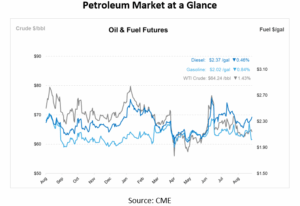
This article is part of Daily Market News & Insights


MARKET CONDITION REPORT - DISCLAIMER
The information contained herein is derived from sources believed to be reliable; however, this information is not guaranteed as to its accuracy or completeness. Furthermore, no responsibility is assumed for use of this material and no express or implied warranties or guarantees are made. This material and any view or comment expressed herein are provided for informational purposes only and should not be construed in any way as an inducement or recommendation to buy or sell products, commodity futures or options contracts.