
DEF Shortages: What We Learned from 2022, And What’s Ahead in 2027
In 2022, DEF (Diesel Exhaust Fluid) shortages and supply concerns caught the attention of many fleet operators across North America. Although there wasn’t a widespread outage, the market experienced tightness, price volatility, and delivery delays that exposed vulnerabilities in the supply chain.
Several global factors contributed to the strain. Countries like China and Russia, key urea exporters, restricted shipments to protect their domestic fertilizer markets, tightening global urea supply. Meanwhile, demand surged as post-pandemic transportation activity picked up, and lean inventories in the U.S. added pressure. Although North America avoided the full-blown crisis that Australia faced, where trucking operations nearly stalled due to DEF shortages, the alarm was enough to prompt many companies to reevaluate their DEF sourcing strategies.
Fleet managers learned a key lesson: DEF isn’t just another consumable. It’s an essential component that keeps diesel vehicles compliant and operational. Without it, modern engines won’t run. Companies without proper supply agreements or on-site storage faced the greatest disruption, while those with bulk DEF systems and flexible sourcing fared better.
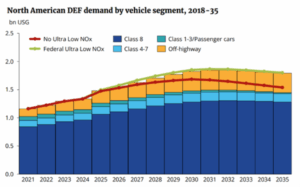
Looking ahead to 2027, the need for stronger DEF planning is even more urgent. Stricter emissions regulations, such as the EPA’s Clean Trucks Plan 2027, focused on greenhouse gas emissions for model year 2027, and heavy-duty vehicles and newer engine technologies are increasing DEF consumption. For instance, a fleet with 10 vehicles could see annual usage grow from around 4,800 gallons to more than 7,200 gallons, requiring both more product and more robust infrastructure.
Planning for Increased Demand
As DEF usage rises, storage and shelf-life considerations become more important. Storage facilities can be customized to meet operational needs, ranging from a few hundred gallons to over 4,000 gallons. This is convenient, cost-effective over time, and reduces the hassle of running out.
If your DEF needs are on the lighter side, packaged options – ranging from 2.5-gallon jugs to 330-gallon totes – might make more sense. They’re easy to store, simple to use, and don’t require any special equipment.
Using a tote system allows you to take advantage of bulk pricing without needing the space or volume for a full tank. And with Mansfield, that benefit goes even further. Unlike most providers who only refill totes in limited regions or only deliver in full truckloads, Mansfield can refill totes nationwide. That means you get a consistent supply, better economics, and full coverage wherever your operations are.
Looking Forward
The DEF challenges were a warning about supply risks and the need for proactive planning. With demand set to rise in 2027, now is the time to review consumption forecasts, invest in storage solutions, and establish reliable supply partnerships.
DEF keeps your fleet on the road. Making it a priority today helps avoid disruptions tomorrow.
Looking for High-Quality DEF for your Fleet? Look no further!
Mansfield Energy understands the importance of protecting fleet assets. Today’s high-tech diesel engines are expensive. Using poor-quality, off-spec DEF can increase fuel consumption, equipment downtime, and maintenance expenses. Mansfield ensures customers always have a reliable supply of high-quality DEF that consistently meets ISO standards.
With our extensive network of DEF distribution partners combined with our own dedicated assets, Mansfield offers unmatched DEF logistics to ensure you always have the DEF you need. Contact us today!
DEF Equipment Catalog
Looking for the right equipment for your DEF needs? With Mansfield’s DEF Equipment Catalog, you can explore a variety of DEF equipment options and request information or purchase support directly. Check out our online catalog today!
This article is part of Daily Market News & Insights
Tagged: Clean Trucks Plan, DEF bulk delivery, DEF catalog, DEF demand 2027, DEF Distribution, DEF Equipment, DEF infrastructure, DEF Logistics, DEF planning, DEF pricing, DEF Quality, DEF shortages, DEF sourcing strategy, DEF storage, DEF Supply, DEF Supply Chain, DEF tote refill, diesel emissions, Diesel Exhaust Fluid, EPA 2027 regulations


MARKET CONDITION REPORT - DISCLAIMER
The information contained herein is derived from sources believed to be reliable; however, this information is not guaranteed as to its accuracy or completeness. Furthermore, no responsibility is assumed for use of this material and no express or implied warranties or guarantees are made. This material and any view or comment expressed herein are provided for informational purposes only and should not be construed in any way as an inducement or recommendation to buy or sell products, commodity futures or options contracts.