

Week in Review – Oil Prices Retreat, but Fuel Supply Risks Remain
Oil prices moved lower on Friday as the market focused on the possibility of additional crude and diesel releases to ease pressure on global fuel prices. Prompt WTI futures were down more than $3.50 per barrel, while Brent moved below $100. European gasoil futures also fell as governments discussed adding more emergency supply to the market.
France proposed that European countries release 50 million barrels of diesel while International Energy Agency members release another 50 million barrels of crude oil. The discussions come as governments try to lower fuel prices without drawing emergency inventories down too aggressively. Europe is also weighing whether any release should be tied to a U.S. commitment not to impose a unilateral diesel export ban.
The bigger issue is that the current market stress is increasingly centered on refined products rather than crude alone. Middle East crude flows have been improving, but diesel supply remains constrained by lower refinery output across the Middle East and Russia. China has also suspended refined-product exports for October to preserve domestic inventories, reducing another source of supply for the global market.
Gasoline markets are also showing signs of tightness. Asian gasoline refining margins climbed to record levels as refinery outages and China’s export halt tightened supply. Singapore’s light distillate inventories, which include gasoline and naphtha, also fell to a five-year low during the week ending September 30.
China remains important on both sides of the market. While the country is keeping more refined products at home, it also issued another round of crude import quotas to private refiners, bringing 2026 quotas to roughly 258 million tons, a record level according to the information provided. That combination could support crude demand while limiting the amount of finished fuel available to international buyers.
Geopolitical risk has also not disappeared. The U.S. is deploying another aircraft carrier and 10,000 additional troops to the Middle East, while the Houthis have continued attacks in Saudi Arabia. Ukraine has also struck oil facilities in Russia’s Samara and Volgograd regions. At the same time, physical crude inventories continue to decline, and prompt cargoes remain priced well above future deliveries.
OPEC+ is facing additional uncertainty around future production capacity. Its review of member capacity, which will help determine 2027 production quotas, has been delayed until mid-November after the Middle East conflict disrupted projects intended to expand output. Those delays could affect both future supply expectations and negotiations over how much individual members are allowed to produce.
Canada is in a somewhat stronger position than many other markets because it is a net exporter of diesel. The country’s energy minister said Canada has contingency plans for potential diesel supply disruptions, including a possible U.S. export ban. While Canadian consumers are still facing higher prices, the country has not experienced the same shortages seen elsewhere.
Canada is also looking to expand its role as an international energy supplier. Prime Minister Mark Carney is expediting regulatory approval for a new oil pipeline intended to improve access to Asian markets, with construction expected to begin in September 2027. The country is also expanding LNG export capacity as international buyers look for more diversified energy supplies.
Outside of physical supply, the economic backdrop remains supportive but mixed. U.S. manufacturing activity was roughly unchanged in September, while stronger construction spending raised the third-quarter GDP tracking estimate to an annualized 3.4%. Federal Reserve Vice Chair Philip Jefferson also indicated that future policy changes will depend on incoming economic data and the broader outlook.
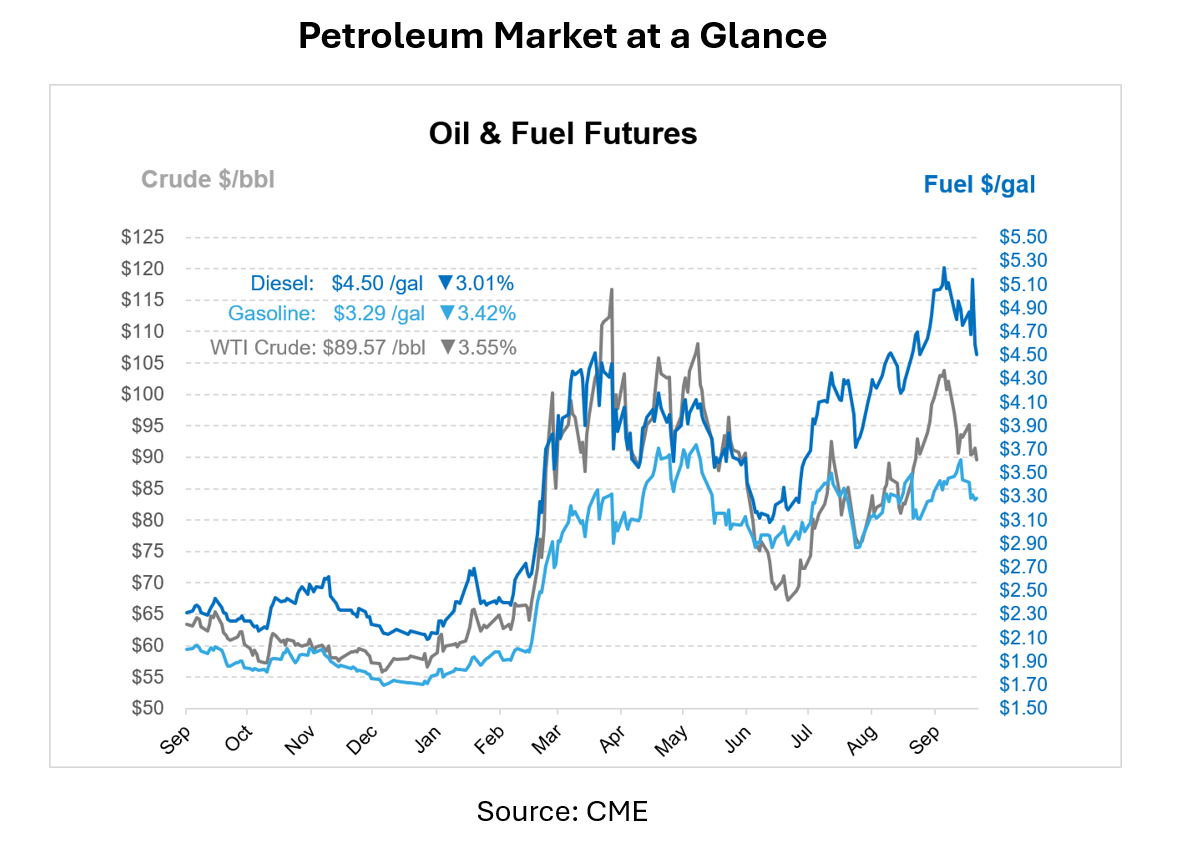
Potential reserve releases and improving Middle East crude flows are putting downward pressure on prices, but refinery disruptions, tight diesel and gasoline supplies, geopolitical risk, and uncertainty around global trade flows continue to provide support. The key issue is no longer just how much crude oil is available, but whether enough of it can be refined into the products consumers need and moved reliably to the markets where demand remains strong.
Prices in Review
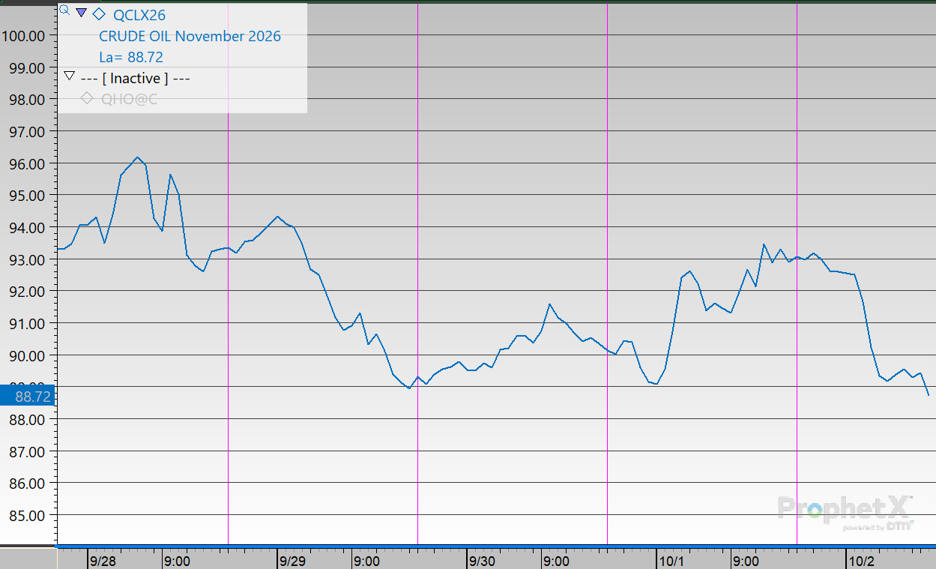
Crude prices were relatively steady early in the week before a sharp midweek decline and subsequent recovery. Prices moved from $93.58 on Monday to $93.53 on Tuesday, then dropped to a weekly low of $89.00 on Wednesday. Prices regained ground over the next two days, rising to $90.40 on Thursday and $93.46 on Friday. Overall, crude prices were nearly unchanged, declining by just $0.12 per barrel, or approximately 0.1% for the week.
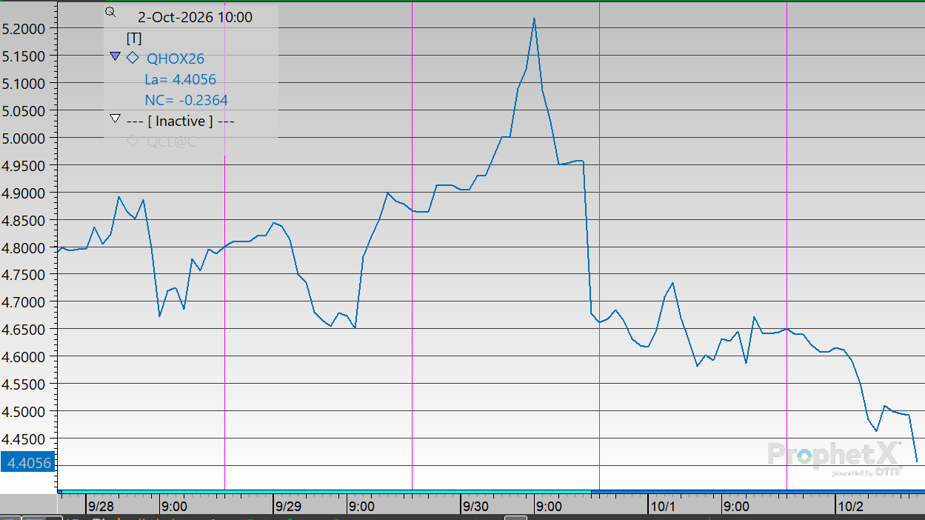
Diesel prices showed some strength midweek before turning lower over the final two sessions. After starting at $4.8126 on Monday and dipping slightly to $4.7957 on Tuesday, prices rose to a weekly high of $4.8662 on Wednesday. That increase was short-lived, with diesel falling to $4.6945 on Thursday and then to $4.6450 on Friday. Overall, diesel prices declined by $0.1676 per gallon, representing an approximate 3.5% decrease for the week.
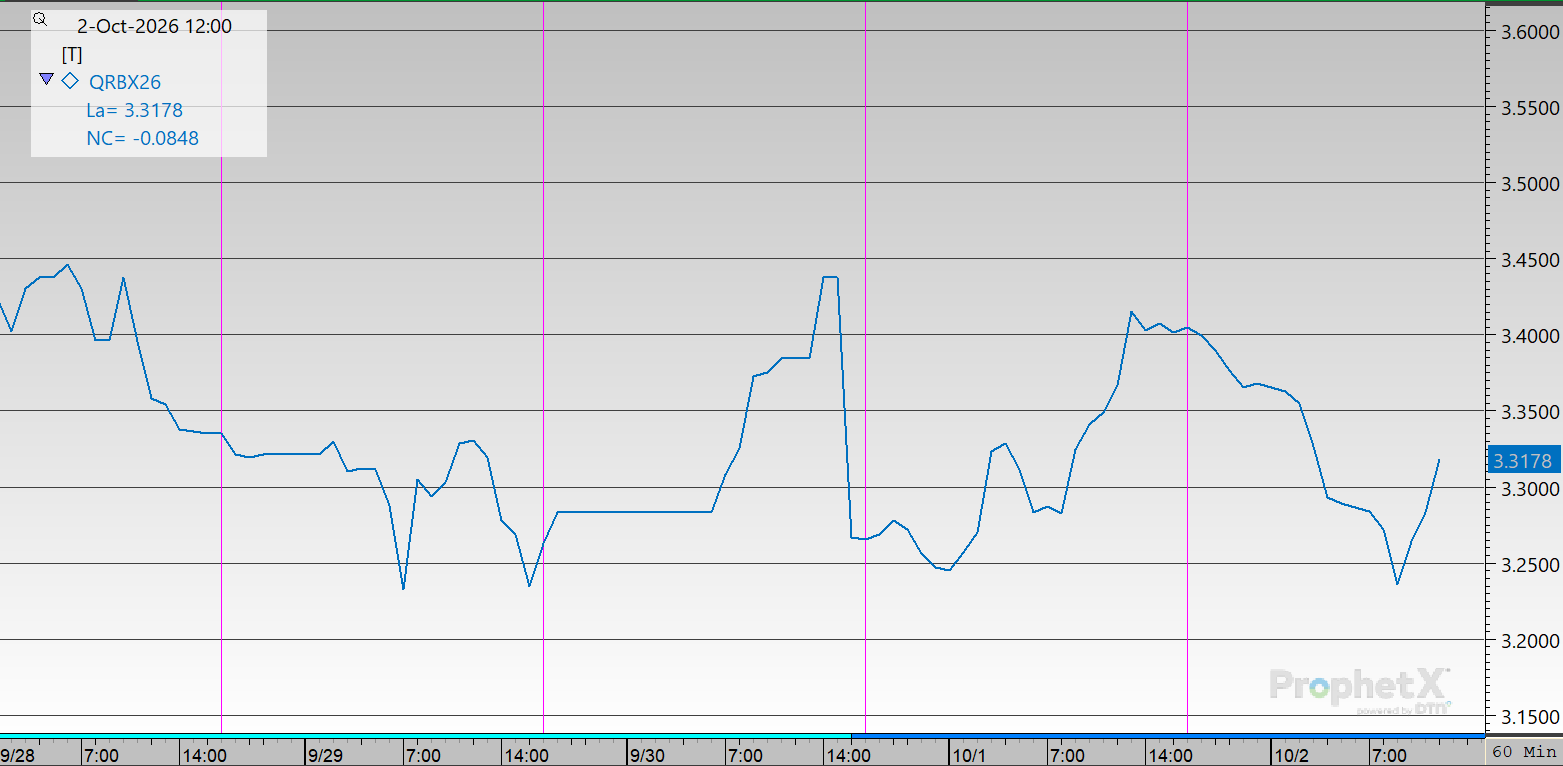
Gasoline prices fell sharply during the first half of the week before reversing direction. Prices moved from $3.4558 on Monday to $3.3294 on Tuesday, then reached a weekly low of $3.2302 on Wednesday. A recovery followed, with gasoline rising to $3.2720 on Thursday and $3.4064 on Friday. Despite regaining much of the earlier decline, gasoline prices were $0.0494 per gallon lower, representing an approximate 1.4% decrease for the week.
This article is part of Daily Market News & Insights


MARKET CONDITION REPORT - DISCLAIMER
The information contained herein is derived from sources believed to be reliable; however, this information is not guaranteed as to its accuracy or completeness. Furthermore, no responsibility is assumed for use of this material and no express or implied warranties or guarantees are made. This material and any view or comment expressed herein are provided for informational purposes only and should not be construed in any way as an inducement or recommendation to buy or sell products, commodity futures or options contracts.