

Oil Prices Extend Gains on Saudi Supply and Hormuz Concerns
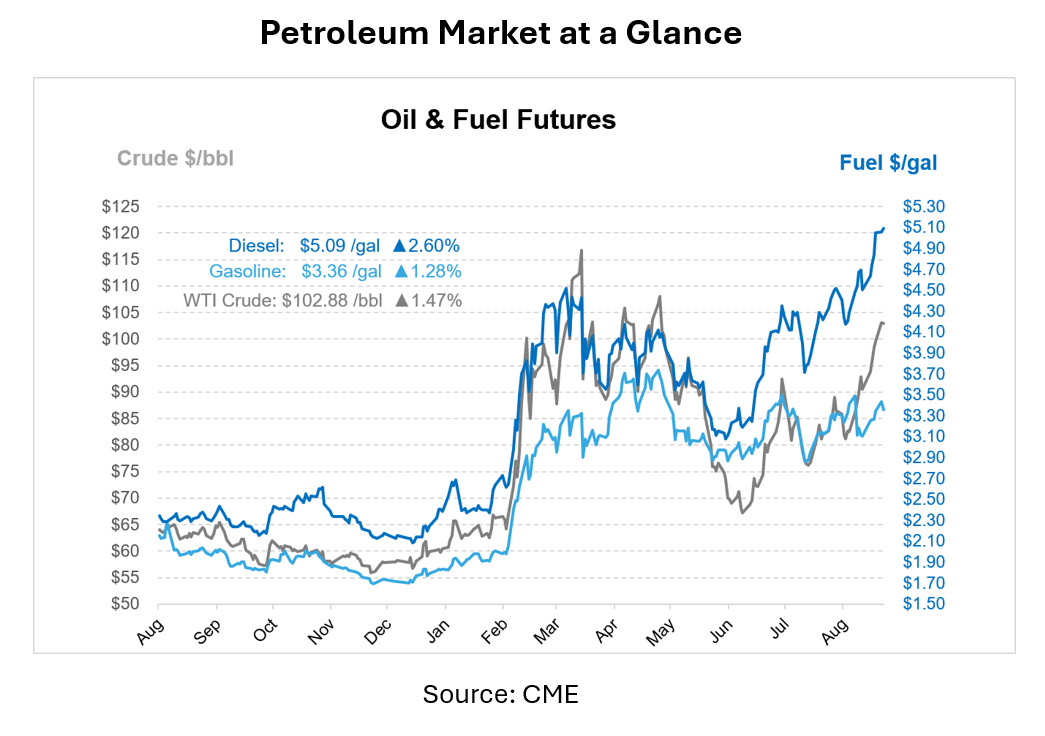
Oil prices moved higher on Tuesday as the market continued to weigh growing risks to global crude and refined-product supplies. Brent crude traded around $106 per barrel after reaching $108.43 earlier in the session, while WTI climbed to about $103 after trading as high as $104.21. The latest move comes as attacks on Saudi energy infrastructure, sharply reduced shipping through the Strait of Hormuz, and continued refinery disruptions in Russia add pressure to an already constrained market.
A major concern is Saudi Arabia’s East-West Pipeline, which remains offline after last week’s attacks. The pipeline provides Saudi Arabia with an alternative route for crude exports that bypasses the Strait of Hormuz, making its shutdown especially significant while traffic through Hormuz remains limited. The disruption has threatened up to 4% of global oil supply and estimates for how long repairs could take range from very soon to as long as eight weeks.
Saudi Arabia is now attempting to increase oil flows through the Strait of Hormuz, but movement through the waterway remains extremely limited. Commodity vessel traffic through Hormuz fell to just four ships on Monday, down from 10 the previous day. Before the Iran war began, the strait typically handled about 125 large commercial vessels per day and accounted for roughly 20% of the world’s daily crude oil and liquefied natural gas supply.
The situation has become more complicated following additional attacks in the region. Houthi forces said they launched dozens of missiles and drones at a military air base in southern Saudi Arabia on Monday, while planned discussions between Gulf Arab states and Iran over the Strait of Hormuz were postponed. That delay represents another setback for efforts to reduce tensions and restore more reliable oil flows through the region.
The combination of damaged infrastructure and constrained shipping is also strengthening concerns about how much crude can actually reach the global market. The WTI October-November futures recently climbed to their strongest level since July, reflecting tighter near-term crude balances. In China, yuan-denominated crude futures also reached a record high.
Russia is adding another layer of pressure, particularly in refined products. Half of the country’s six largest diesel-producing refineries have significantly reduced or completely halted output in September following drone attacks. The Kirishi refinery has been fully shut, while the Volgograd refinery and NORSI are reportedly operating at about one-quarter of capacity. Together, Russia’s six largest diesel-producing plants account for roughly half of the country’s diesel production.
Those disruptions have already reduced Russian fuel production and forced Moscow to restrict exports of gasoline, diesel and jet fuel. Before the restrictions, Russian diesel exports had already fallen well below year-earlier levels, adding another constraint to global refined-product availability.
There is one potential source of relief: efforts to reduce attacks on energy infrastructure in the Russia-Ukraine conflict. Ukrainian President Volodymyr Zelenskyy said Ukraine would be prepared to stop strikes on critical Russian infrastructure if Russia also refrains from attacking Ukrainian infrastructure. However, no formal agreement has been reached, and Ukraine continued attacks overnight, striking the Syzran refinery and causing a fire at the facility.
For now, the market remains focused on whether damaged infrastructure can return to service and whether shipping routes can become more reliable. With Saudi export capacity under pressure, Hormuz traffic sharply reduced, and Russian refinery output constrained, the market has less flexibility to absorb additional disruptions. Until those supply routes and refining operations improve, crude and refined-product prices are likely to remain highly sensitive to new developments across both the Middle East and Russia.
This article is part of Daily Market News & Insights


MARKET CONDITION REPORT - DISCLAIMER
The information contained herein is derived from sources believed to be reliable; however, this information is not guaranteed as to its accuracy or completeness. Furthermore, no responsibility is assumed for use of this material and no express or implied warranties or guarantees are made. This material and any view or comment expressed herein are provided for informational purposes only and should not be construed in any way as an inducement or recommendation to buy or sell products, commodity futures or options contracts.