
Iran-UAE Tensions Add New Pressure to Hormuz Crude Flows
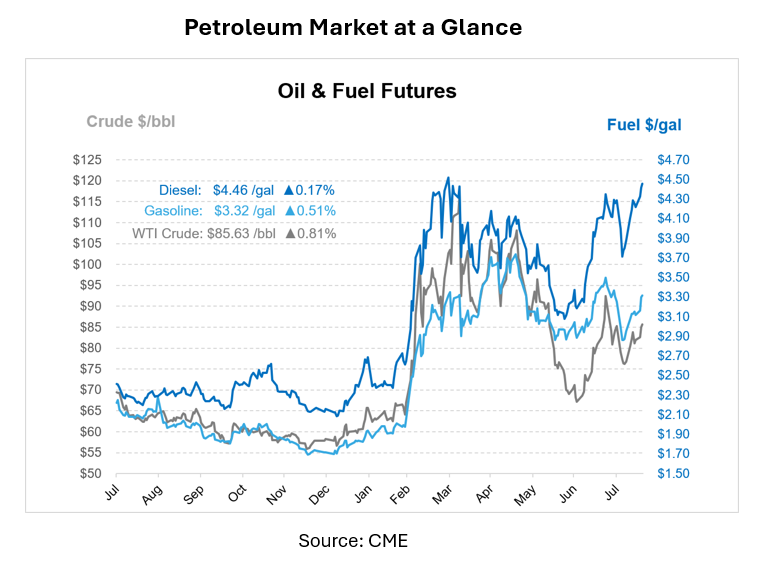
Oil prices opened higher on Wednesday morning as renewed tension in the Middle East brought supply and shipping risks back into focus. Prompt WTI futures were trading about $0.90 per barrel higher, with markets reacting to deteriorating relations between Iran and the United Arab Emirates, stalled U.S.-Iran diplomacy, and fresh concerns about vessel traffic through the Strait of Hormuz.
The latest escalation came after the UAE said it detected two ballistic missiles launched from Iran on Tuesday. According to the UAE, the missiles targeted maritime traffic and fell into the sea. Iran rejected the accusation, calling it baseless. Following the incident, the UAE announced that it was suspending trade, commercial exchanges, and financial transactions with Iran until further notice.
The move adds another layer of uncertainty to a conflict that has already disrupted energy flows. The Strait of Hormuz has remained a central concern for energy markets throughout the conflict, and recent developments are once again raising questions about how safely and reliably crude can move through the region.
Those concerns became more visible this week when three crude supertankers reportedly reversed course in the Strait of Hormuz following heightened security risks and a vessel attack on Tuesday. The U-turns are important because they show that geopolitical risk is not limited to headlines. When shipowners and operators change routes or delay movements because of security concerns, the disruption can quickly affect the cost and availability of moving crude.
At the same time, hopes for a diplomatic breakthrough have faded. President Trump said Tuesday that there are no talks or conversations taking place or scheduled with Iran following the expiration of the temporary agreement between the two countries. Iran has also indicated that the Strait remains shut to shipping, while Trump has maintained that the waterway is open and operating.
The disagreement leaves markets without a clear picture of conditions in the Strait. More importantly, the expiration of the temporary ceasefire and the absence of new negotiations increase the possibility that tensions could continue rather than ease in the near term.
Oil producers are also adjusting how they move barrels to customers. Saudi Arabia has told at least three European refiners that they will receive their full contractual crude volumes next month, while offering several delivery options outside the traditional route. Those include Egypt’s Mediterranean port of Sidi Kerir, Saudi Arabia’s Red Sea port of Yanbu, and ship-to-ship transfers from Malta.
That flexibility may help keep crude moving even when traditional shipping routes face greater risk. It also highlights how producers and buyers are adapting their logistics to the changing security environment rather than assuming normal shipping patterns will continue.
The pressure is even more noticeable in refined products. The prompt NYMEX heating oil versus WTI crack spread rose by more than $1 per barrel Tuesday and closed at a record $102.78 per barrel. The crack spread measures the difference between the value of heating oil and the crude used to produce it, and its sharp increase shows just how strong the pricing pressure has become in the distillate market.
U.S. inventory expectations are adding another piece to the picture. The American Petroleum Institute forecast a 0.3 million-barrel crude inventory draw for the week ended August 14, including a 1.4 million-barrel draw at Cushing. API also expected gasoline inventories to increase by 1.1 million barrels while distillate inventories to decline by 2.8 million barrels. A sizable distillate draw would be especially notable given the already elevated product-market pricing.
Broader economic data remain part of the market backdrop, but geopolitical risk is currently taking center stage. Housing starts fell 12.4% in July, while housing permits increased 5.0%. Goldman Sachs expects July core PCE inflation to have increased 0.20% for the month and 3.24% from a year earlier, with headline PCE expected to rise 0.12% for the month and 3.61% year over year.
For energy markets, however, the immediate question is whether the latest escalation leads to further disruptions in the Strait of Hormuz or whether shipping can continue despite the growing security risks. With diplomatic talks stalled, vessels changing course, and regional relationships becoming more strained, oil prices are once again carrying a larger geopolitical risk premium.
This article is part of Daily Market News & Insights


MARKET CONDITION REPORT - DISCLAIMER
The information contained herein is derived from sources believed to be reliable; however, this information is not guaranteed as to its accuracy or completeness. Furthermore, no responsibility is assumed for use of this material and no express or implied warranties or guarantees are made. This material and any view or comment expressed herein are provided for informational purposes only and should not be construed in any way as an inducement or recommendation to buy or sell products, commodity futures or options contracts.