Mobile Fueling vs. Bulk Fuel Tanks: Which Is Right for Your Fleet?
For fleets that consume significant amounts of fuel, relying on retail stations is not always the most efficient option. Driving to a station, waiting for a pump, fueling the vehicle and returning to the route all take time. Bringing fuel directly to the operation can help eliminate those stops, but businesses still have an important decision to make: install a bulk fuel tank or use mobile fueling?
There is no single answer that works for every fleet. The right choice depends on fuel volume, available space, labor costs, operational priorities and how much control the business wants over its fuel supply.
When Bulk Fuel Tanks Make Sense
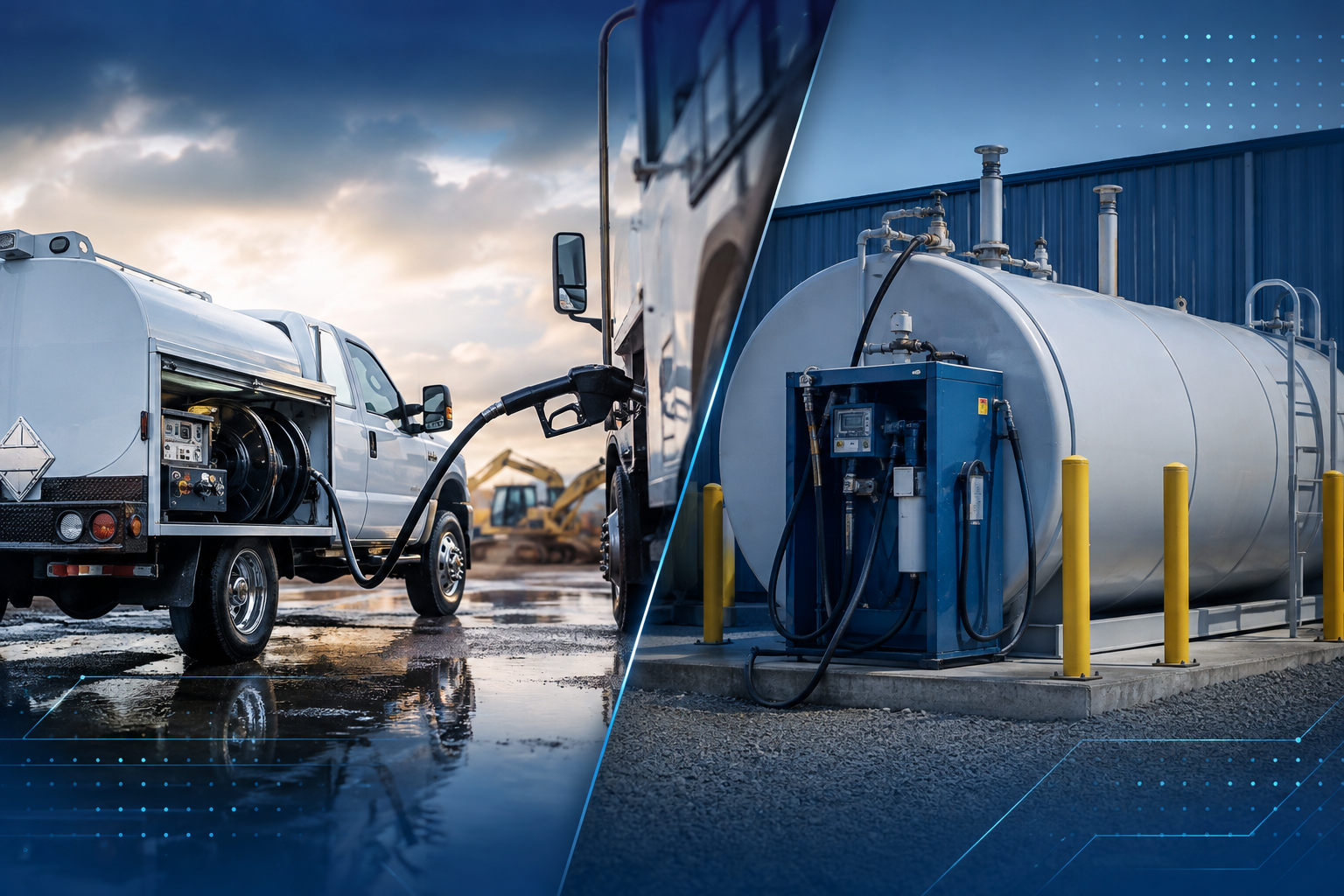
Bulk fueling brings fuel directly to a business location, where it is stored in an onsite tank and dispensed into vehicles or equipment as needed.
For high-volume fleets operating from a centralized location, this approach can offer attractive fuel economics. Purchasing larger quantities may reduce the delivered cost per gallon, while onsite inventory gives the business more control over when fuel is purchased and replenished.
Having fuel onsite can also strengthen supply preparedness. Instead of depending entirely on a delivery arriving when vehicles need fuel, businesses maintain an inventory that can be accessed around the clock. That can be especially valuable for operations that need to continue running during severe weather, emergencies or other supply disruptions.
The tradeoff is responsibility. Installing a tank requires space, equipment and ongoing maintenance, and depending on the size and configuration, permitting and environmental requirements may apply. The U.S. Environmental Protection Agency notes that facilities with aboveground oil storage may be subject to Spill Prevention, Control, and Countermeasure requirements. State and local requirements can also apply.
For permanent locations with predictable, sustained fuel demand, however, the investment can make sense.
When Mobile Fueling Makes Sense
Mobile fueling takes a different approach. Instead of storing a large fuel supply onsite and having employees fuel vehicles, the fuel provider brings fuel directly to individual vehicles or equipment.
The biggest advantage is productivity.
Vehicles can be fueled while they are parked, often during scheduled downtime, so drivers can begin their shifts ready to work. This eliminates trips to retail stations and can reduce the time employees spend waiting and fueling.
Consider a fleet with 50 drivers who each spend 15 minutes fueling every workday. Combined, that represents 12.5 labor hours per day devoted to fueling. Even if mobile fueling carries a higher delivered fuel cost, reducing those non-productive hours can change the overall economics.
Mobile fueling can also be useful for businesses that do not want to purchase and maintain permanent fueling infrastructure. It may be easier to implement at sites with limited space, temporary operations or locations where fuel demand is not high enough to justify a bulk tank.
Look Beyond the Price Per Gallon
When comparing the two options, focusing only on fuel price can miss a large part of the equation.
For bulk fueling, businesses should consider the potential per-gallon savings alongside tank installation, dispensing equipment, maintenance, compliance and inventory costs.
For mobile fueling, the calculation should include the value of the driver time that could be recovered, along with the convenience of eliminating onsite fueling responsibilities.
A high-volume fleet with hundreds of vehicles returning to the same terminal may find that a bulk tank offers the best combination of cost and control. Another operation may determine that eliminating driver fueling time produces greater savings even if its delivered fuel price is higher.
Some companies may benefit from both. Bulk fueling might make sense at a large terminal, while mobile fueling could serve smaller or temporary locations where installing a tank is less practical.
Finding the Right Fit
Ultimately, the question is not simply whether bulk tanks or mobile fueling are better. It is the approach that creates the most value for a specific operation.
Businesses should evaluate fuel volume, driver time, available space, infrastructure costs, emergency fuel needs, and long-term plans before making the decision. Mansfield can help fleets evaluate those factors by location and determine whether bulk fueling, mobile fueling, or a combination of the two provides the right fit.
The goal is not just to find the lowest fuel price. It is to understand the total cost of fueling the fleet and build a program that supports both operational efficiency and reliable fuel access.
This article is part of Daily Market News & Insights


MARKET CONDITION REPORT - DISCLAIMER
The information contained herein is derived from sources believed to be reliable; however, this information is not guaranteed as to its accuracy or completeness. Furthermore, no responsibility is assumed for use of this material and no express or implied warranties or guarantees are made. This material and any view or comment expressed herein are provided for informational purposes only and should not be construed in any way as an inducement or recommendation to buy or sell products, commodity futures or options contracts.