

Oil Climbs Past $120, Reaching Wartime High Amid Iran War
Oil markets remain closely tied to developments in the Iran war, with ongoing supply disruptions supporting higher prices and increased volatility. Brent crude surged above $120 per barrel this week, marking a four-year high, before easing back to around $115.
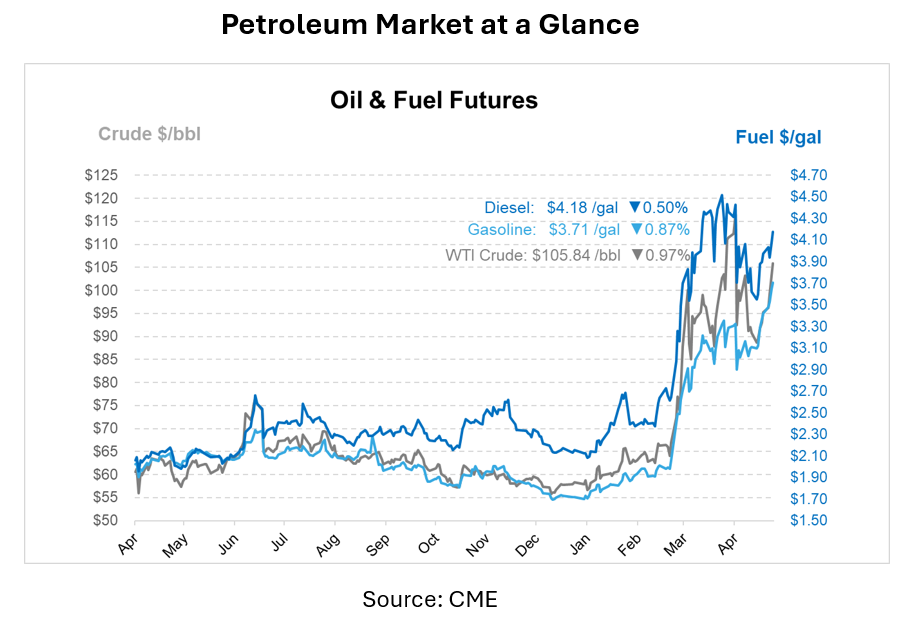
At the center of the disruption is the Strait of Hormuz, which remains effectively closed. Flows are running at a fraction of normal levels, with only limited vessel traffic moving through. The constraint is tightening global supply just as U.S. crude exports reach record highs and inventories draw more sharply than expected, putting upward pressure on both crude and refined product prices.
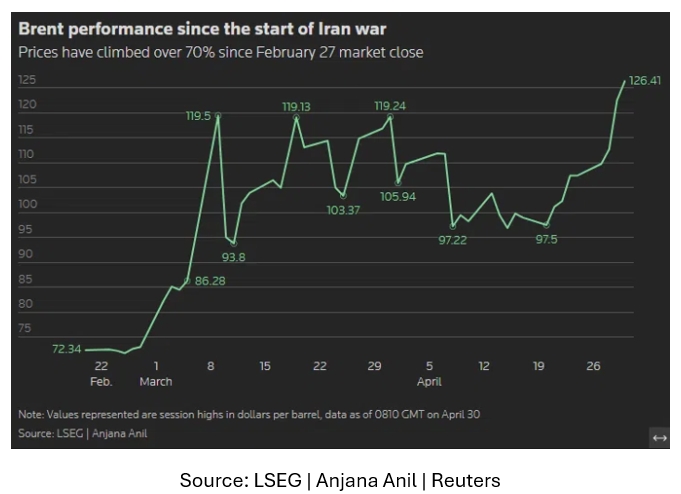
President Donald Trump has maintained that the U.S. naval blockade on Iranian ports will stay in place until a nuclear agreement is reached, while also considering potential military strikes to break the negotiation stalemate. Iran has warned it will respond to further attacks, keeping escalation risks elevated and limiting the chances of a near-term resolution. In response, global buyers are already shifting strategy. Japanese refiners are securing U.S. crude cargoes ahead of time, while China is seeking alternative supply, including from Russia, to offset shortages tied to sanctions and disrupted flows.
At the same time, structural changes in the supply landscape are adding another layer of uncertainty. The United Arab Emirates’ decision to exit OPEC introduces questions around future production discipline and coordination within the group. While the move could eventually allow the UAE to increase output independently, any near-term impact is limited by the ongoing disruption in the Middle East and restricted trade flows. OPEC is still expected to meet to assess supply conditions, but its ability to stabilize the market is being overshadowed by the scale of the current supply shock.
On the macro side, the Federal Reserve is now factoring energy prices into its outlook. The FOMC left interest rates unchanged at its latest meeting but acknowledged that inflation “is elevated,” in part due to higher oil prices. That creates a more complex backdrop, where rising fuel costs are not only tightening supply but also influencing economic activity and demand expectations.
Looking ahead, the market is increasingly pricing in a prolonged disruption rather than a short-term shock. GIR price forecasts reflect that shift, with expectations for Brent crude averaging around $86 per barrel in 2026 and WTI near $80, both revised higher as analysts factor in extended supply disruptions tied to the conflict.
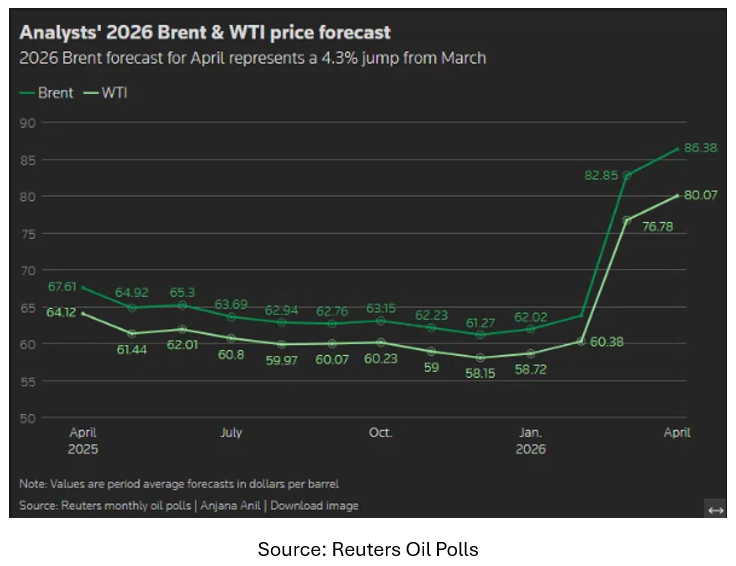
Even with those longer-term averages, near-term pricing risk remains on the upside, especially if the Strait of Hormuz remains closed for an extended period. For now, tight supply, elevated prices, and continued volatility remain the defining features of the oil market.
This article is part of Daily Market News & Insights


MARKET CONDITION REPORT - DISCLAIMER
The information contained herein is derived from sources believed to be reliable; however, this information is not guaranteed as to its accuracy or completeness. Furthermore, no responsibility is assumed for use of this material and no express or implied warranties or guarantees are made. This material and any view or comment expressed herein are provided for informational purposes only and should not be construed in any way as an inducement or recommendation to buy or sell products, commodity futures or options contracts.