

What’s That: The Jones Act Waiver
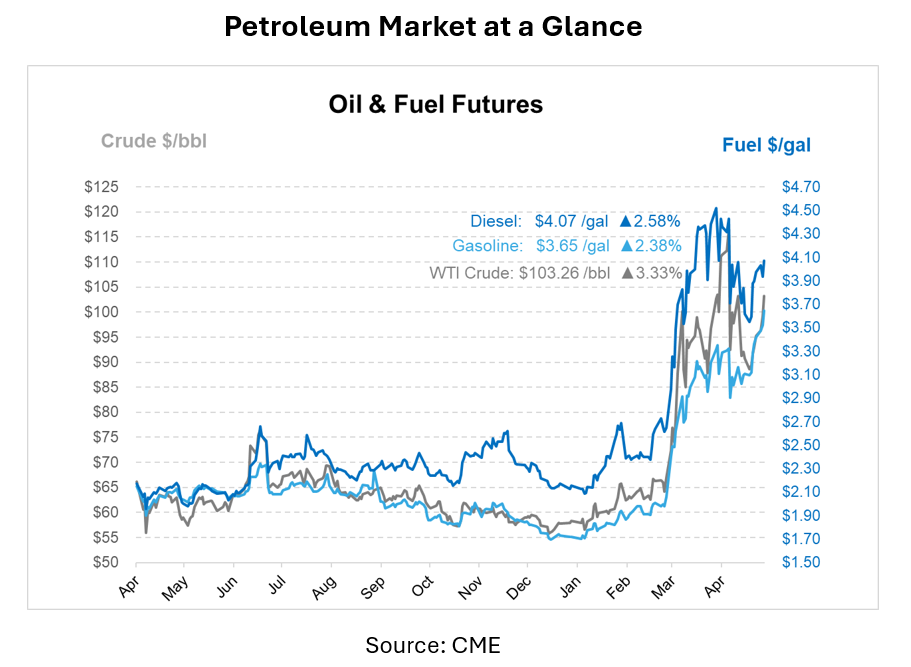
As the Iran war continues to disrupt global energy flows, the White House has extended the temporary Jones Act waiver for an additional 90 days. The waiver was initially announced on March 18, 2026, for 60 days, as oil prices surged and shipping disruptions tightened global supply.
The new extension begins May 18 and runs through mid-August, reflecting continued pressure on global energy markets from halted tanker traffic, reduced overseas production, and elevated price volatility. By expanding access to available tanker capacity, the administration aims to support domestic fuel movement and mitigate near‑term pressure on U.S. energy markets.
What Is the Jones Act?
The Jones Act, enacted in 1920, requires that goods transported between U.S. ports be carried on U.S.-built, U.S.-flagged, and U.S.-crewed vessels. The law was originally designed to support the U.S. maritime industry and strengthen national security following heavy shipping losses during World War I.
Under certain conditions, the law can be temporarily suspended if enforcing it is determined to conflict with national defense or broader economic stability.
What the Waiver Does
The waiver allows foreign‑flagged vessels to move fuel and other commodities between U.S. ports for a limited period. This expanded access increases available shipping capacity and helps reduce bottlenecks within the domestic supply chain, particularly during continuing market stress.
Rather than increasing total oil supply, the waiver addresses logistical constraints by improving the flexibility and speed at which fuel can be redistributed within the U.S.
Why the Waiver Was Extended
Oil prices have remained volatile since the outbreak of war involving Iran, driven by heightened supply risk and shipping disruptions. Nearly all tanker movements through the Strait of Hormuz have stalled, prompting production cuts across parts of the Middle East and tightening global supply.
To counter those pressures, the administration extended the waiver, citing expanded domestic shipping capacity and improved movement of U.S.-produced oil to domestic ports. Officials noted that dozens of tankers have already relied on the waiver, significantly increasing the availability of fuel transportation between regions.
The extension is intended to help mitigate near‑term market disruptions while global supply routes remain constrained.
Why the U.S. Market Is Still Exposed
Despite being a net exporter of oil, the U.S. remains sensitive to global price movements. Oil is traded on international markets, and disruptions overseas are quickly reflected in domestic pricing.
Additionally, much of U.S. oil production consists of lighter crude grades, while many refineries, particularly along the East and West Coasts, are configured to process heavier crude. As a result, imports remain necessary even during periods of strong domestic output, making efficient transportation critical.
Temporary Measure in a Volatile Market
The Jones Act waiver is part of a broader effort to stabilize supply amid global disruption. International partners have committed to releasing oil from emergency stockpiles, and the Trump administration confirmed that the U.S. plans to release 172 million barrels from its Strategic Petroleum Reserve over 120 days in support of the IEA initiative.
While these actions can help ease short-term pressure, they are widely viewed as temporary bridges. Refiners purchase crude well in advance, and supply takes time to move through the system. If geopolitical tensions persist, fuel prices could remain elevated.
Why This Matters for the Market
The Jones Act waiver does not change global production levels, but it plays an important role in reducing domestic transportation friction during periods of heightened risk. As the conflict involving Iran continues to disrupt global shipping routes and oil supply, the extension reflects ongoing efforts to keep fuel moving efficiently within the U.S. market amid elevated volatility.
This article is part of Daily Market News & Insights
Tagged: crude oil transportation, domestic fuel logistics, energy logistics solutions, energy market disruption, global oil supply chain, Iran war oil impact, jones act waiver, maritime law United States, oil price volatility, oil transportation US, Strait of Hormuz disruption, tanker capacity US, US energy policy


MARKET CONDITION REPORT - DISCLAIMER
The information contained herein is derived from sources believed to be reliable; however, this information is not guaranteed as to its accuracy or completeness. Furthermore, no responsibility is assumed for use of this material and no express or implied warranties or guarantees are made. This material and any view or comment expressed herein are provided for informational purposes only and should not be construed in any way as an inducement or recommendation to buy or sell products, commodity futures or options contracts.