
Ceasefire Brings Relief, but Big Questions Remain
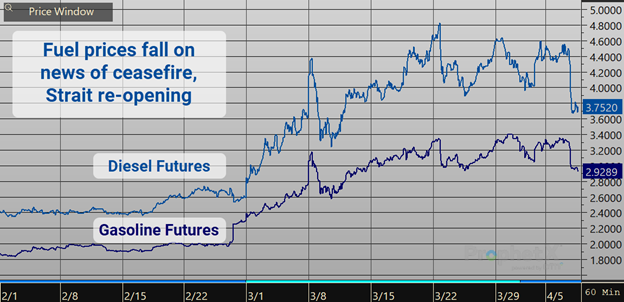
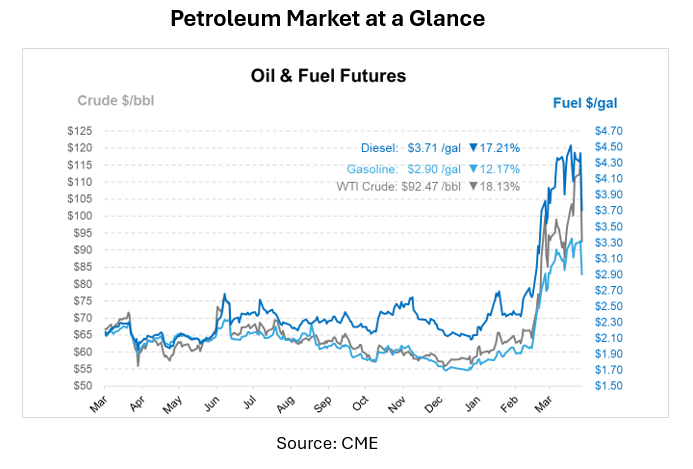
The announcement of a two-week ceasefire between the U.S. and Iran has taken the edge off what had quickly become one of the most severe energy disruptions in modern history. WTI futures are down by more than $20 per barrel, and financial markets responded with a wave of short-term relief.
Although prices are falling, there are many questions that need answering in the coming days. When will shipping be able to resume through the Strait? Will the ceasefire hold? And most importantly for prices – how much damage has already been done?
When Will Shipments Resume through Hormuz?
The Strait of Hormuz, with its tight shipping lanes and proximity to Iran’s coast, has been the focal point of the conflict. The ceasefire is predicated on its re-opening – yet even with both sides tentatively agreeing to open the Strait, it will take time before marine traffic can safely continue.
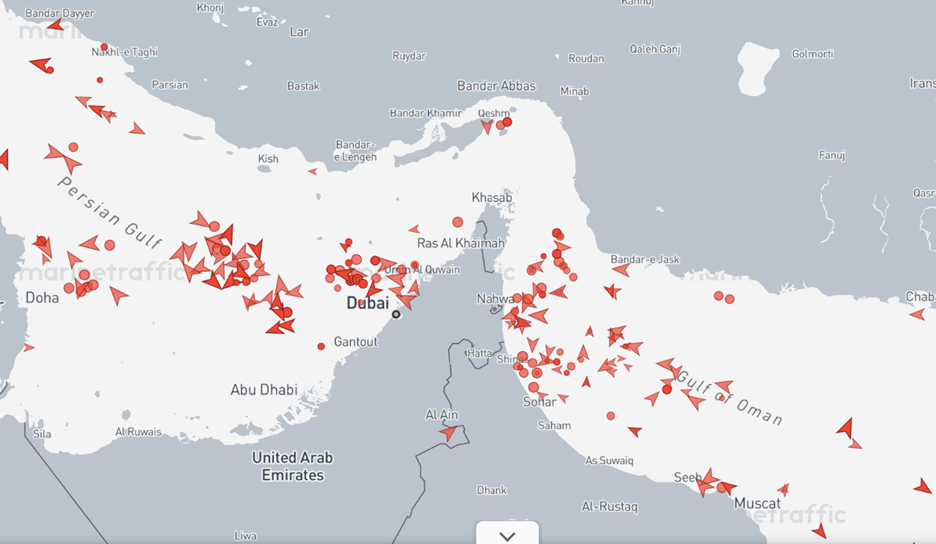
In the Gulf, the scale of the disruption is still visible. Hundreds of tankers loaded with crude oil, refined products, and liquefied natural gas remain stranded, with roughly 172 million barrels of oil and products sitting idle in the region. More than 1,000 vessels are effectively caught in limbo, waiting for clarity on how transit will resume. Even under ideal conditions, clearing that backlog would take weeks. In reality, the process is likely to be slower, as shipowners weigh operational risks that have not yet been fully resolved.
Iran has signaled that shipping could restart, but only in a controlled and coordinated way. Passage would require alignment with Iranian military authorities, and early indications suggest that initial movements may be limited and prioritized. That introduces a layer of complexity that the market has not had to navigate at this scale before. For shipping companies and insurers, the issue is no longer just whether vessels can move through the Strait, but whether they can do so consistently, safely, and without the risk of becoming stranded again if tensions flare.
Will the Ceasefire Hold?
Beyond shipping, the ceasefire itself remains fragile. While direct hostilities between the U.S. and Iran have paused, the broader region has not fully stabilized. Military activity continues in adjacent areas, and key elements of the conflict remain unresolved. Iran’s willingness to fully reopen the Strait appears tied to progress in upcoming negotiations, and political messaging from both sides suggests that underlying tensions are still very much in place.
For energy markets, the immediate price correction reflects a release of worst-case fears, not a return to balance. The reopening of Hormuz, even partially, would allow a significant volume of trapped supply to move, including crude, diesel, and LNG that have been sitting on vessels for weeks. That alone provides a short-term relief valve, particularly for Asia, where dependence on Middle Eastern energy flows is highest and where disruptions have already forced adjustments in industrial activity and fuel consumption.
How Much Long-Term Damage Has Been Done?
The longer-term picture is more constrained. The conflict has reduced effective supply by millions of barrels per day, as exports collapsed and producers shut in output they could not move. Restarting that production is not immediate. Oilfields, refineries, and export terminals damaged during the conflict will take time to repair, and operators are unlikely to ramp up fully without confidence that logistics and shipping capacity are stable. At the same time, the shipping system itself has been disrupted, with tanker availability and routing patterns still adjusting to the new risk environment.
Even in a more optimistic scenario, the market is expected to remain tighter than it was before the war. Estimates suggest that global supply could be structurally reduced by several million barrels per day over the next few years, as infrastructure repairs, inventory rebuilding, and ongoing geopolitical risk continue to weigh on flows. That creates a situation where prices may ease from recent peaks, but still carry a sustained premium tied to uncertainty in the region.
The ceasefire has clearly shifted momentum. The market is no longer pricing in a full and immediate shutdown of Middle Eastern energy flows. But it is also not pricing in stability. What exists now is a narrow window where supply can begin to move again, while risk remains elevated and confidence rebuilds slowly.
The crisis phase may be cooling, but the system is still fragile, and until shipping flows normalize, infrastructure recovers, and negotiations produce something more durable, energy markets will continue to operate with a built-in layer of uncertainty.
This article is part of Daily Market News & Insights


MARKET CONDITION REPORT - DISCLAIMER
The information contained herein is derived from sources believed to be reliable; however, this information is not guaranteed as to its accuracy or completeness. Furthermore, no responsibility is assumed for use of this material and no express or implied warranties or guarantees are made. This material and any view or comment expressed herein are provided for informational purposes only and should not be construed in any way as an inducement or recommendation to buy or sell products, commodity futures or options contracts.