

Oil Holds Firm Above $100 as Supply Constraints Persist
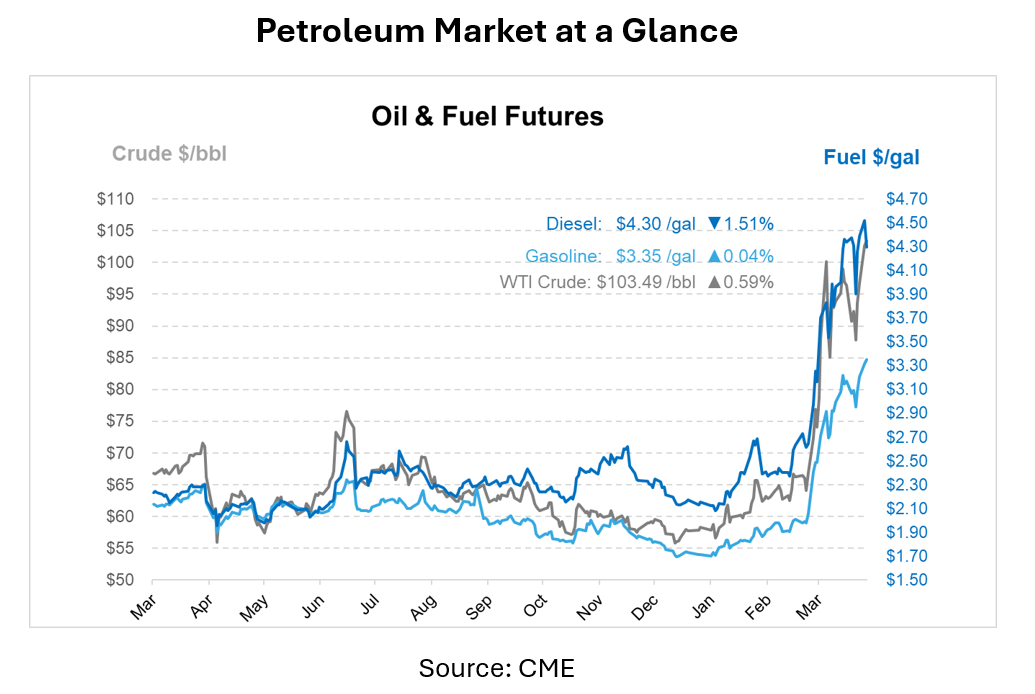
Global energy markets remain under pressure as geopolitical tensions in the Middle East continue to disrupt supply flows and push oil prices higher. Crude futures are holding near recent highs, with WTI crude oil trading above $100 per barrel and Brent crude oil climbing above $115. The sharp rise reflects a market constrained by limited physical flows, particularly through the Strait of Hormuz, where tanker traffic has dropped from roughly 135 ships per day to just six. This bottleneck is tightening global supply and reinforcing concerns that disruptions could extend further into April.
Recent attacks on energy infrastructure and shipping have added another layer of uncertainty. Iran struck a Kuwait oil tanker near Dubai, marking one of the first direct tanker incidents in weeks and highlighting ongoing risks to seaborne crude flows. While no oil spill was reported, the escalation underscores the vulnerability of critical transit routes. At the same time, mixed signals from the White House suggest that while military operations continue, diplomatic discussions are still underway, with the possibility of ending the conflict even if the Strait of Hormuz remains partially closed.
The market reaction has been swift and significant. Brent is on track for one of its largest monthly gains on record, rising more than 50% since the conflict began, while WTI has posted its strongest increase since 2020. Analysts are rapidly revising their outlooks, with 2026 price forecasts rising sharply. Expectations now place Brent near $82.85 per barrel and WTI around $76.78 on average next year, substantially higher than pre-conflict estimates. At the same time, more extreme scenarios remain on the table, with some projections suggesting prices could test historical highs if supply disruptions persist.
Beyond pricing, the broader economic impact is becoming clearer. The conflict has triggered what analysts describe as a “stagflation shock,” where rising energy costs are slowing economic growth while pushing inflation higher. Supply constraints are expected to reduce global growth forecasts and increase inflation expectations, particularly in emerging markets that are more exposed to energy imports. Central banks, including the Federal Reserve, are signaling a cautious approach, opting to monitor inflation risks rather than respond immediately to energy-driven price spikes.
Looking ahead, the trajectory of the energy market will largely depend on the duration of disruptions in the Strait of Hormuz and the pace of any geopolitical resolution. Even if flows begin to normalize in the coming months, depleted inventories and ongoing infrastructure risks are expected to keep supply tight. For now, the market remains firmly focused on near-term availability, with elevated prices reflecting both immediate shortages and the growing risk premium tied to one of the world’s most critical energy corridors.
This article is part of Daily Market News & Insights


MARKET CONDITION REPORT - DISCLAIMER
The information contained herein is derived from sources believed to be reliable; however, this information is not guaranteed as to its accuracy or completeness. Furthermore, no responsibility is assumed for use of this material and no express or implied warranties or guarantees are made. This material and any view or comment expressed herein are provided for informational purposes only and should not be construed in any way as an inducement or recommendation to buy or sell products, commodity futures or options contracts.