
Oil Prices Rise as Iran, Russia, and Export Routes Face Pressure
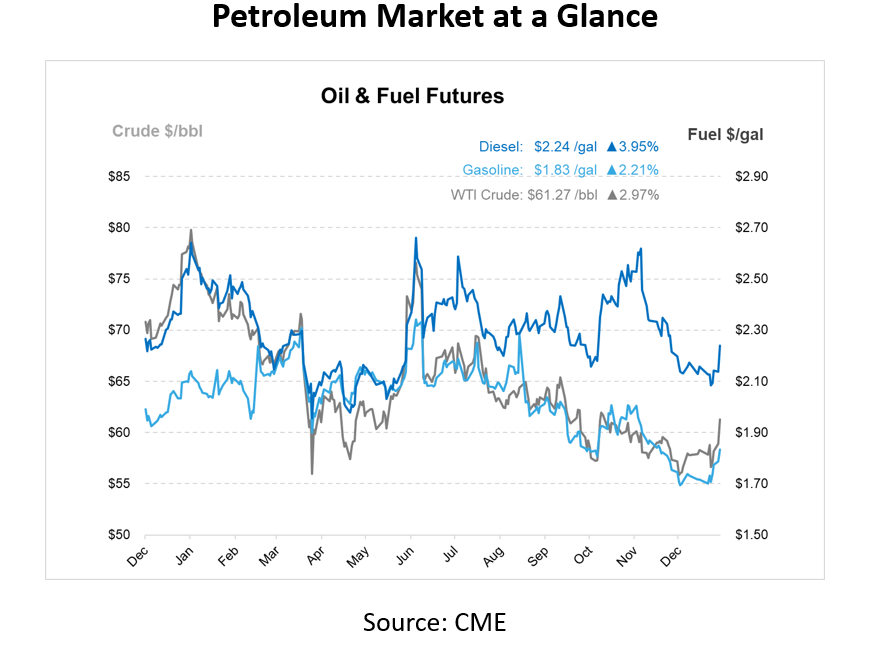
Oil prices are moving higher as geopolitical disruptions take center stage across several major producing regions, pushing supply concerns back into the spotlight. Crude futures climbed more than $1.10 per barrel this morning, reaching two-month highs and extending gains from the prior session as markets reacted to a series of developments affecting global oil flows.
At the center of the move is Iran, where the country is experiencing its largest anti-government demonstrations in years. Protests have spread nationwide, and reports indicate hundreds of deaths and thousands of arrests. Adding to the tension, German Chancellor Friedrich Merz stated that the Iranian regime may be in its “final days and weeks.” Against this backdrop, U.S. pressure on Iran intensified after President Donald Trump announced an immediate 25% tariff on all goods from countries doing business with Iran. Because Iran exports a significant portion of its crude to China, the announcement has heightened concerns around potential disruptions to Iranian oil exports. Barclays estimates that unrest in Iran has already added roughly $3–$4 per barrel in geopolitical risk premium to oil prices.
At the same time, developments tied to the Russia-Ukraine conflict have further unsettled the market. Four oil tankers were struck by unidentified drones in the Black Sea while traveling to load crude at the Caspian Pipeline Consortium terminal off the Russian coast. This incident highlighted the vulnerability of key export routes in the region. Compounding the issue, Kazakhstan’s oil output declined by 35% during the first half of January compared with December averages, citing export constraints at the CPC terminal, which plays a critical role in moving Kazakh crude to global markets.
While these supply risks are supporting prices, attention is still on Venezuela. Two major commodities trading houses have begun discussions with refiners in India and China regarding Venezuelan crude cargoes scheduled for delivery in March. These talks follow recent comments from President Trump suggesting that Venezuela could hand over up to 50 million barrels of oil to the United States despite ongoing sanctions. Global trading houses have moved quickly to position themselves ahead of traditional energy majors as potential Venezuelan barrels re-enter international trade flows.
These geopolitical dynamics are also showing up in global pricing relationships. Brent crude’s premium to the Middle East benchmark Dubai climbed to its highest level since July, with the Exchange of Futures for Swaps reaching nearly $2 per barrel. The wider spread makes Brent-linked grades more expensive for Asian buyers and encourages increased purchases of Middle Eastern crude instead. Even so, Middle Eastern benchmarks remain under pressure due to adequate supply following higher OPEC+ output in 2025 and relatively limited demand growth from Asia.
Beyond the oil market, broader financial conditions remain part of the backdrop. U.S. equity markets traded slightly lower ahead of the release of December CPI data, with expectations for modest monthly increases driven in part by higher food and energy prices. As a result, oil markets continue to balance macroeconomic signals with fast-moving geopolitical events, with supply security concerns currently dominating day-to-day price action.
This article is part of Daily Market News & Insights


MARKET CONDITION REPORT - DISCLAIMER
The information contained herein is derived from sources believed to be reliable; however, this information is not guaranteed as to its accuracy or completeness. Furthermore, no responsibility is assumed for use of this material and no express or implied warranties or guarantees are made. This material and any view or comment expressed herein are provided for informational purposes only and should not be construed in any way as an inducement or recommendation to buy or sell products, commodity futures or options contracts.