

Bullish Sentiment Rises as Markets React to Trade Pacts and Sanctions
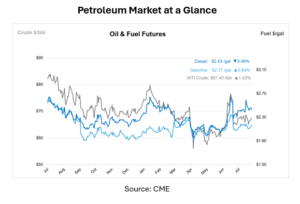
Oil prices are on the rise this week as a potent mix of trade breakthroughs, political pressure, and global supply disruptions reignites bullish sentiment in the market. Brent crude inched up to $70/bbl on Tuesday, the highest since mid-July, while WTI followed suit at $67/bbl. Monday’s 2% price increase set the tone, driven by momentum from a newly announced U.S.-EU trade agreement, revived U.S.-China negotiations, and renewed geopolitical strain over the war in Ukraine.
A major factor supporting the bullish sentiment is a new trade agreement between the U.S. and the European Union. While the deal imposes a 15% tariff on most EU imports, it successfully avoided a broader trade war that could have hurt global fuel demand. The agreement includes ambitious provisions for the EU to purchase $750 billion in U.S. energy over the next three years and invest $600 billion in the U.S. economy during President Trump’s second term. While the targets may be optimistic, the agreement signals stronger transatlantic economic cooperation.
Simultaneously, trade discussions between the U.S. and China continued in Stockholm, with reports suggesting a 90-day extension of their trade truce is likely. This development could help stabilize global economic conditions, further supporting oil demand forecasts. Meanwhile, President Trump has intensified his demands on Russia, shortening his ceasefire deadline in Ukraine from 50 days to just 10–12, and threatening additional sanctions. The heightened rhetoric has raised concerns about supply risk, fueling additional upward pressure on oil prices.
Beyond politics, supply-side disruptions are also contributing to market volatility. In India, Indo-Russian refiner Nayara Energy is reducing production due to sanctions and logistical constraints. Thailand’s Bangchak refinery is offline for repairs after a fire, and Russia has temporarily banned gasoline exports following drone attacks and delayed maintenance. In contrast, China’s refiners are operating at full steam, with July distillate exports expected to reach their highest level since March 2024, as refiners take advantage of strong margins and rising throughput.
Domestically, the Trump administration is also taking steps to boost U.S. production. On Monday, the Department of the Interior rescinded Biden-era restrictions on oil and gas drilling in Alaska’s National Petroleum Reserve (NPR-A), reopening over 13 million acres for potential development. Officials argue the rollback restores balance between resource development and environmental protections, at a time when Alaskan crude output is at its lowest level since 1976.
Looking ahead, OPEC+ is set to meet on August 3 to finalize a proposed 548,000 bpd production increase. The group is urging discipline among members who previously exceeded quotas, signaling a continued effort to manage global supply. Meanwhile, the U.S. Federal Reserve’s upcoming policy announcement could influence broader market sentiment, particularly if it signals a more dovish stance on cooling inflation.
This article is part of Daily Market News & Insights
Tagged: Bullish Sentiment Rises, Markets React, sanctions, Trade Pacts


MARKET CONDITION REPORT - DISCLAIMER
The information contained herein is derived from sources believed to be reliable; however, this information is not guaranteed as to its accuracy or completeness. Furthermore, no responsibility is assumed for use of this material and no express or implied warranties or guarantees are made. This material and any view or comment expressed herein are provided for informational purposes only and should not be construed in any way as an inducement or recommendation to buy or sell products, commodity futures or options contracts.