Fueling Smarter: How the Right Fueling Method Impacts Your Bottom Line
If you manage a fleet, you know that fuel is one of the largest operational expenses. It’s how you choose to fuel your equipment that impacts your bottom line. Each fueling method, whether on-site tanks or retail stations, comes with its own advantages, as well as hidden costs.
Every business has its own operational strategy, but streamlining existing processes, especially when it comes to fuel management, is what keeps you ahead and allows you to make more informed and cost-efficient fueling decisions. Choosing the right fueling method ensures compliance and maximizes your overall operational efficiency, saving you time and money.
Labor Time: The Hidden Cost of Convenience
Whether you’re operating a large fleet or heavy machinery on a jobsite, fuel needs to be available when and where you need it. Depending on the mode of operations, the type of fueling method can make or break productivity, reduce downtime, and offer greater control over fuel usage and costs.
Consider retail gas stations. A quick stop at the pump isn’t always quick. Between fueling, waiting, and distractions like snacks or drinks, drivers can lose 15–30 minutes or more per trip. While on-road fueling may seem convenient at first, labor time and costs can escalate fast, especially without a reliable fleet card network. A well-managed fleet card program streamlines fueling by controlling driver spending, tracking transactions in real time, and minimizing time lost to off-route stops and manual receipts. That’s where Mansfield comes in with a powerful fleet card network designed to give you full control and visibility. With our fuel data management portal, FuelNet, you can easily manage every aspect of your fueling program, all in one place.
Where Is Your Fuel Really Going?
Without visibility into consumption patterns, your operations become vulnerable to costly inefficiencies in your fuel usage and spend. Especially with manual tracking, you risk hidden errors and discrepancies. If you want to keep your equipment running smoothly, accurate monitoring and tracking gives you full control and efficient fuel management.
In the context of where your fuel goes, shrinkage refers to the loss of fuel that happens between the point of purchase or delivery and the point of actual use or sale. This loss can be caused by various factors, including:
- Theft – Unauthorized siphoning or misuse by drivers or third parties
- Spillage or evaporation – During transfers, fueling, or storage (especially with volatile fuels)
- Meter inaccuracies – Faulty equipment that underreports fuel dispensed
- Administrative errors – Mistakes in manual tracking, receipts, or logs
Shrinkage is a big concern because it affects operational costs, accountability, and inventory accuracy. Areas where tools like fleet cards, telematics, on-site tank monitoring, and automated reporting systems are used to help detect and reduce these losses.
Control & Oversight: Who’s in Charge of Your Fuel?
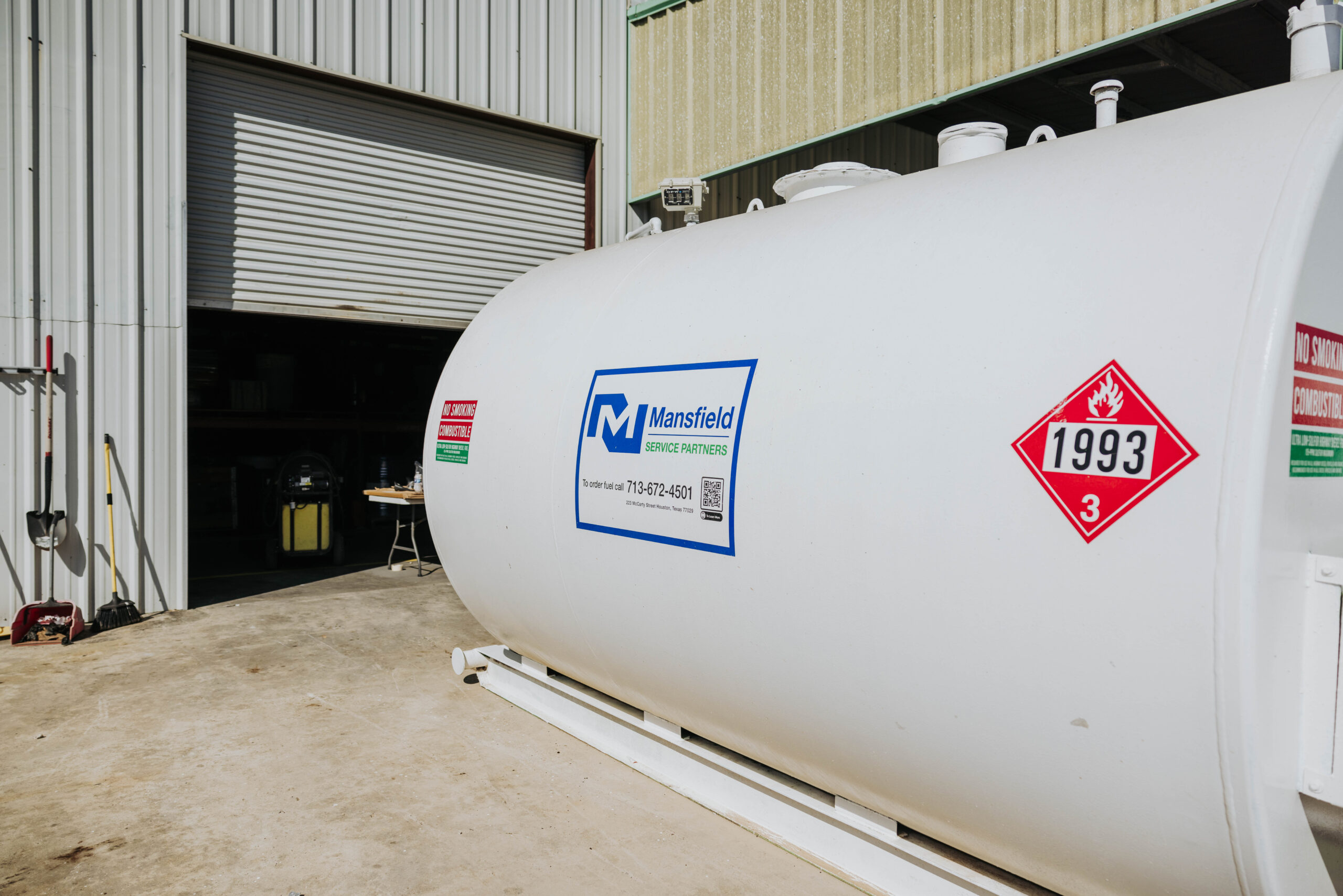
At the end of the day, having full control over your fuel spend, usage, and inventory is a top priority. For fleets constantly on the move, retail stations and cardlock networks may seem like the most efficient fueling options. But when you factor in all aspects of efficiency like time, cost, and fuel usage, on-site fuel tanks provide unmatched access, visibility, and control.
Think of on-site tanks as total command. With metered pumps, controlled access, and direct integration into fuel management and telematics platforms, on-site fueling solutions can drastically reduce shrinkage and unauthorized use. At Mansfield, one of our top priorities is getting you the fuel you need, when you need it, with full transparency every step of the way. We offer automated tank monitoring and 24/7 dispatching to keep your operations running without interruption.
The Right Fueling Method for You
Each fueling method has its place, but when labor time, fuel loss, and lack of control are factored in, on-site fueling often proves to be the most cost-effective and time-efficient solution for many fleets. Whether you’re managing a private fleet or overseeing large-scale operations, investing in a fueling strategy that prioritizes efficiency, and visibility makes all the difference in achieving long-term savings.
Whether your goal is convenience, compliance, or cost control, Mansfield delivers the right fueling solution to keep your business moving. Reach out to a team member today to discover how we can help you find the fueling method that best fits your operation.
This article is part of Daily Market News & Insights


MARKET CONDITION REPORT - DISCLAIMER
The information contained herein is derived from sources believed to be reliable; however, this information is not guaranteed as to its accuracy or completeness. Furthermore, no responsibility is assumed for use of this material and no express or implied warranties or guarantees are made. This material and any view or comment expressed herein are provided for informational purposes only and should not be construed in any way as an inducement or recommendation to buy or sell products, commodity futures or options contracts.