
Where Does America’s Fuel Go? The Rise of U.S. Fuel Exports
The United States has become a major supplier to global petroleum markets, with crude oil and petroleum products moving to markets around the world. In 2025, U.S. petroleum exports averaged about 10.7 million barrels per day, and exports have remained above that level through much of 2026. Most recently, EIA data show U.S. crude oil and petroleum product exports at approximately 11.6 million barrels per day for the week ending September 25.
The numbers highlight how much the U.S. energy position has changed. But they also raise an important question for domestic fuel buyers: Where is all that petroleum going?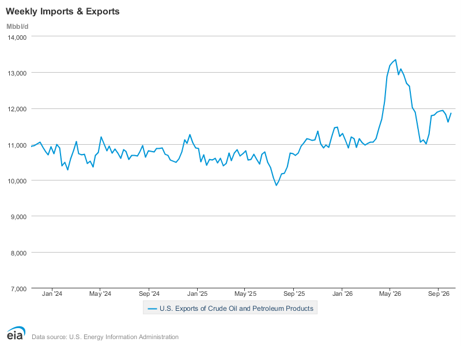
A Global Market for U.S. Petroleum
U.S. petroleum exports reached a new record in 2026. In April, the U.S. exported 13.6 million barrels per day of crude oil and petroleum products, 15% more than the previous record set just one month earlier. EIA reported that crude oil accounted for the largest share at 5.6 million barrels per day, while propane exports exceeded 2 million barrels per day for the first time and distillate fuel oil exports reached 1.6 million barrels per day, their highest level since July 2017. Weekly estimates available when EIA published its analysis showed exports of crude oil, distillate fuel, jet fuel, and propane remained above their five-year seasonal highs in May and June.
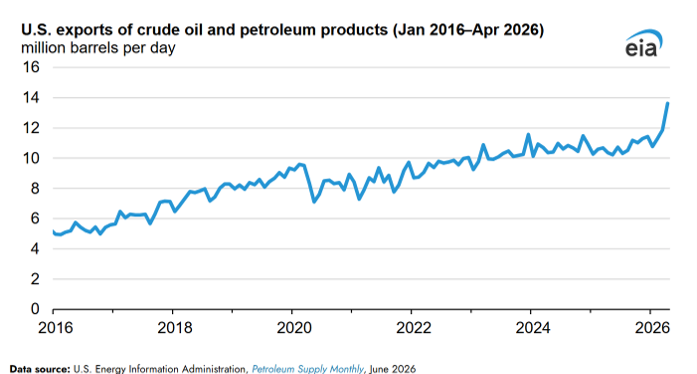
The record includes both crude oil and a broad range of petroleum products. Looking specifically at the transportation fuels used by vehicles, aircraft, and equipment provides a clearer picture of where U.S.-refined fuels are going.
EIA reported that U.S. exports of major transportation fuels averaged approximately 2.4 million barrels per day in 2025. Distillate fuel oil, primarily diesel, accounted for more than half of those exports. Mexico was the largest individual destination for U.S. diesel, receiving about 220,000 barrels per day, or 17% of total distillate exports. Chile and Brazil were the next-largest destinations.
Mexico is even more important for gasoline. It has historically received more than half of U.S. gasoline exports in most years since EIA began publishing country-level data in 1993. In 2025, Guatemala, Colombia, the Bahamas, and Ecuador followed Mexico as major gasoline destinations, according to EIA.
Jet fuel follows a somewhat different trade pattern. EIA data show U.S. jet fuel exports averaged 219,000 barrels per day in 2025, with Mexico receiving 23%, Canada 19%, Panama 9%, and the United Kingdom and Brazil each receiving 5%.
How the U.S. Became a Major Exporter
The growth in exports is the result of years of change across the U.S. energy industry. Domestic crude production expanded substantially with the shale boom, while the removal of most restrictions on U.S. crude oil exports in late 2015 opened additional international markets. At the same time, the country’s large refining system, particularly along the Gulf Coast, has continued producing fuels for both domestic consumption and export. EIA reported that petroleum represented 63% of all U.S. energy exports in 2025.
The Gulf Coast sits at the center of that trade. EIA export data show that PADD 3, which includes the Gulf Coast refining and export hub, accounted for nearly 3.5 billion barrels of crude oil and petroleum product exports in 2025, or close to nine out of every ten barrels exported nationally.
That infrastructure connects U.S. production and refining capacity directly to the global market.
Why Exports Matter to Domestic Fuel Buyers
Exports are an important reminder that U.S. fuel supply does not operate in isolation. A gallon of diesel produced on the Gulf Coast may ultimately serve a trucking operation in the United States or be loaded onto a vessel headed overseas. Refiners and suppliers operate in a global market where international demand, transportation economics, inventories, refinery margins, and regional supply conditions can all influence product flows.
That connection has become especially visible in 2026 as disruptions to Middle Eastern oil flows have changed global trade patterns. U.S. and other producers across the Americas have supplied more crude to Asian markets as buyers seek alternatives to barrels disrupted in the Middle East.
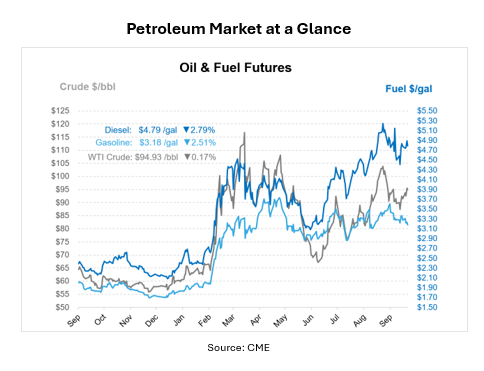
For domestic buyers, this does not mean exports automatically cause higher fuel prices. It does mean that strong overseas demand can become another factor influencing U.S. supply balances and prices. Domestic inventories, refinery operations, seasonal demand, and global buyers are all part of the same interconnected market.
What to Watch Next
The U.S. is likely to remain an important supplier to global petroleum markets, making export trends increasingly relevant for businesses that purchase fuel domestically.
For fuel buyers, watching exports alongside inventories, refinery utilization, international demand, and geopolitical disruptions can provide a more complete picture of market conditions. A country can be a major petroleum producer and exporter while still experiencing regional supply constraints or higher prices when global demand strengthens.
America’s growing role as an energy exporter has changed more than where U.S. barrels travel. It has connected domestic fuel markets more closely to events and demand thousands of miles away.
This article is part of Daily Market News & Insights


MARKET CONDITION REPORT - DISCLAIMER
The information contained herein is derived from sources believed to be reliable; however, this information is not guaranteed as to its accuracy or completeness. Furthermore, no responsibility is assumed for use of this material and no express or implied warranties or guarantees are made. This material and any view or comment expressed herein are provided for informational purposes only and should not be construed in any way as an inducement or recommendation to buy or sell products, commodity futures or options contracts.