

U.S. Crude Stocks Drop to Lowest Level Since 1984
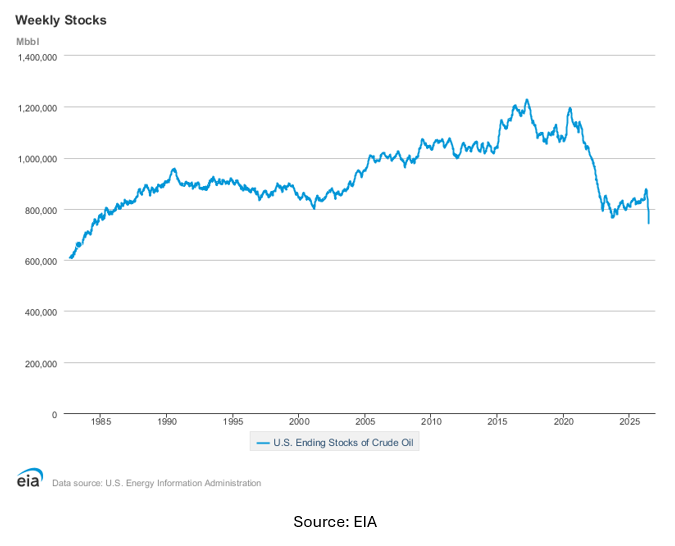
U.S. crude oil inventories have fallen to levels not seen in more than 40 years, highlighting how quickly supply conditions have tightened as global demand remains strong and the Strategic Petroleum Reserve continues to draw down.
According to the EIA, total U.S. crude stocks, including both commercial inventories and oil held in the Strategic Petroleum Reserve, fell by 15.1 million barrels to 743.3 million barrels in the week ending June 19. That marks the lowest level since 1984 and reflects a combination of strong refinery demand, emergency reserve releases, and increased interest in U.S. crude from global buyers. Click here to learn more about the Strategic Petroleum Reserve.
Commercial crude inventories dropped by 6.1 million barrels to 412.1 million barrels, reaching their lowest level since January 2025. The draw was also larger than analysts expected, with a Reuters poll forecasting a 4.5 million-barrel decline.
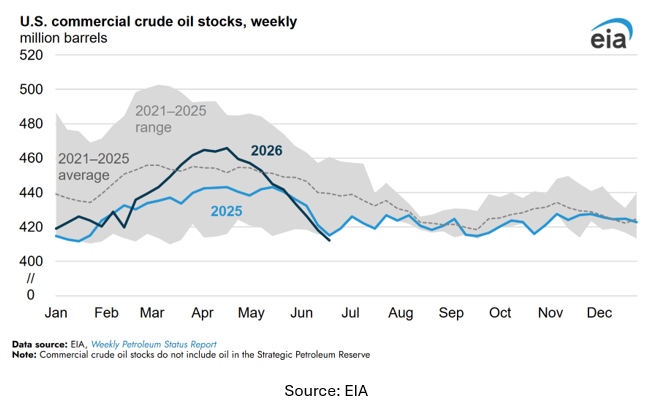
The decline comes as the war in Iran has disrupted global supply flows and pushed more import-dependent countries in Asia and Europe to increase purchases of U.S. crude. With inventories already tightening, that added demand has helped pull crude stocks down to multidecade lows.
The drawdown was also visible at Cushing, Oklahoma, the key U.S. delivery hub. Crude inventories there fell by 1.1 million barrels, reaching their lowest level since October 2014. Lower Cushing stocks can be an important signal for the market because the hub plays a central role in U.S. crude storage, pricing, and delivery.
Refineries remain another key part of the story. Refinery crude runs fell by 81,000 barrels per day last week, while utilization dipped by 0.6 percentage points to 96.1%. Even with that slight decline, utilization remains very high, showing that refiners are still running at a strong pace. That has helped pull crude out of storage while also contributing to builds in refined product inventories.
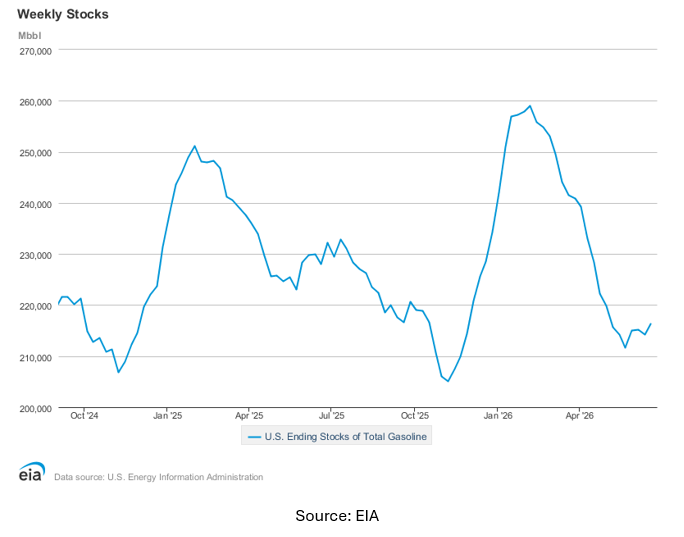
Gasoline stocks rose by 2.1 million barrels to 216.3 million barrels, despite expectations for a draw. Distillate inventories, which include diesel and heating oil, increased by 3.1 million barrels to 106.1 million barrels, also moving higher when analysts had expected a decline. This suggests that while refiners are processing a lot of crude, product demand softened during the week.
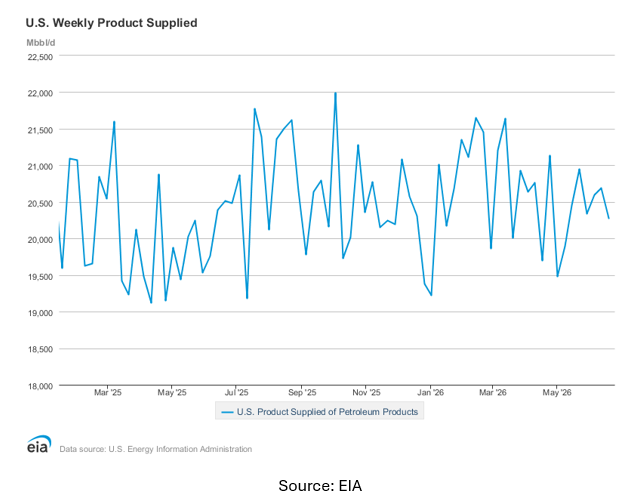
Total product supplied, a common proxy for demand, fell by 413,000 barrels per day to 20.27 million barrels per day. Gasoline demand declined by 437,000 barrels per day to 8.78 million barrels per day, while distillate demand fell by 126,000 barrels per day to 3.53 million barrels per day.
Despite the large crude inventory draw, oil prices were little changed after the EIA report. Markets appeared more focused on improving flows through the Strait of Hormuz, where more stranded tankers have started exiting the key chokepoint following the ceasefire framework.
Shipments through the Strait of Hormuz have increased this week to their highest level since the conflict began in February. U.S. officials said flows are moving closer to pre-war levels, with at least 20 million barrels exiting the strait in a 24-hour period. However, traffic remains below historical norms, and uncertainty remains over how long the current shipping arrangements will hold.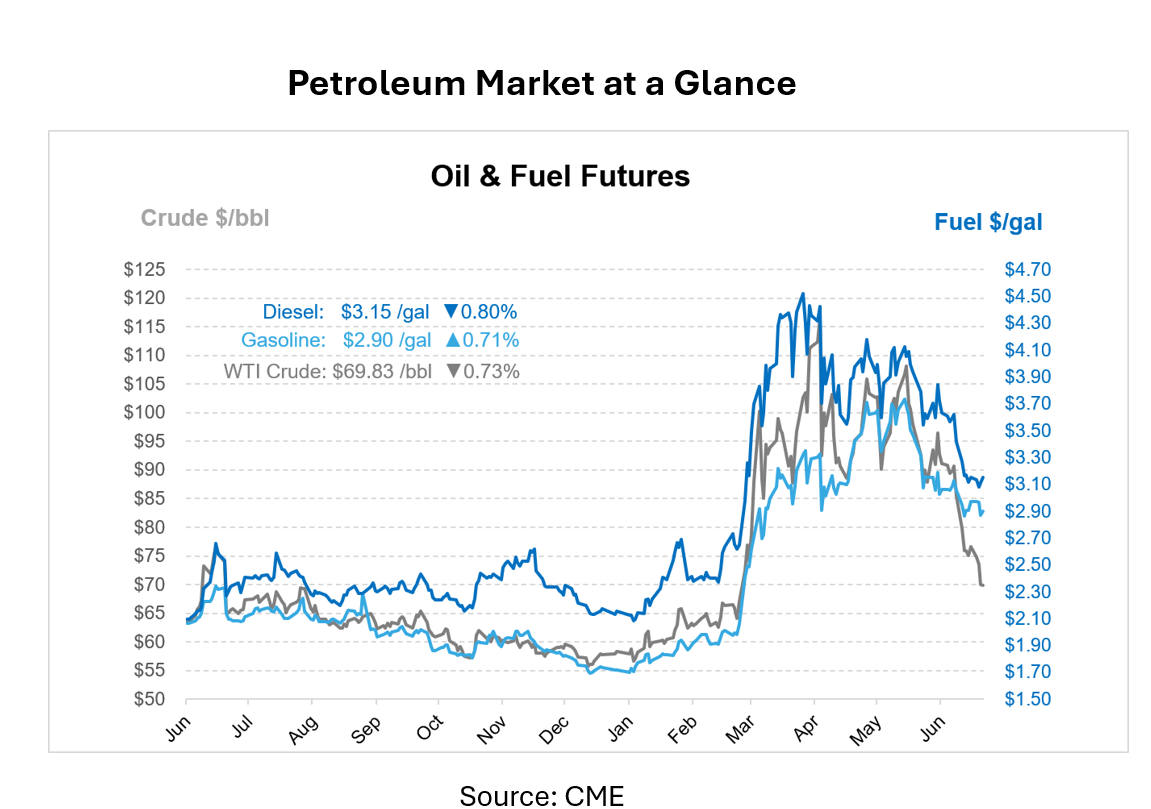
This article is part of Daily Market News & Insights


MARKET CONDITION REPORT - DISCLAIMER
The information contained herein is derived from sources believed to be reliable; however, this information is not guaranteed as to its accuracy or completeness. Furthermore, no responsibility is assumed for use of this material and no express or implied warranties or guarantees are made. This material and any view or comment expressed herein are provided for informational purposes only and should not be construed in any way as an inducement or recommendation to buy or sell products, commodity futures or options contracts.