

Oil Prices Pull Back as Ceasefire Hopes Compete with Supply Risk
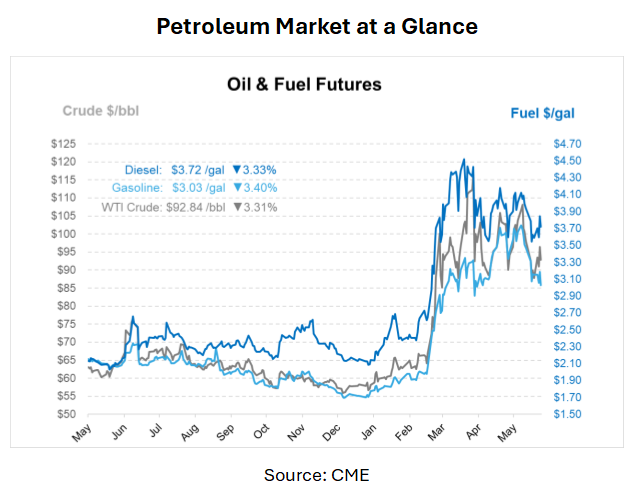
Oil prices moved lower this morning as the market reacted to signs of possible diplomatic progress in the Middle East. WTI futures were down by more than $3 per barrel, reversing gains from the prior session. The pullback came after Israel and Lebanon agreed to a ceasefire framework, raising hopes that the agreement could help move broader U.S.-Iran talks forward.
The ceasefire agreement is important because Iran has tied any potential peace deal with Washington, in part, to an end to fighting between Israel and Hezbollah in Lebanon. According to the White House, the ceasefire depends on a “complete cessation” of attacks by Hezbollah and the removal of Hezbollah operatives from Lebanese territory south of the Litani River near the Israeli border. However, uncertainty remains. Israel’s defense minister said strikes in Lebanon would continue for now, and Hezbollah has not clearly accepted the agreement.
That uncertainty is keeping a floor under the market. The Strait of Hormuz remains a major concern because it normally handles about one-fifth of global oil and liquefied natural gas flows. The U.S. is reportedly coordinating with shippers to help vessels move through the area by turning off transponders and staying close to the Omani coast to avoid Iranian mines. As long as flows through the strait remain restricted, the risk of tighter supply continues to support prices.
U.S. politics added another layer to the story. The House of Representatives voted 215-208 to halt the U.S. war with Iran, but the vote does not immediately stop military action. The Senate would still need to pass the resolution, and additional support would be needed to overcome a likely presidential veto. Still, the vote shows growing pressure in Washington to limit U.S. involvement and bring the conflict closer to an end.
Supply data also remains supportive. The EIA reported an 8.0 million barrel crude draw for the week ended May 29, which was twice the 4.0 million barrel draw expected by Reuters. Cushing inventories also fell by 0.6 million barrels. U.S. crude oil inventories are now about 3% below the five-year average for this time of year. Gasoline inventories are about 5% below the five-year average, while distillate inventories are about 3% below the five-year average.
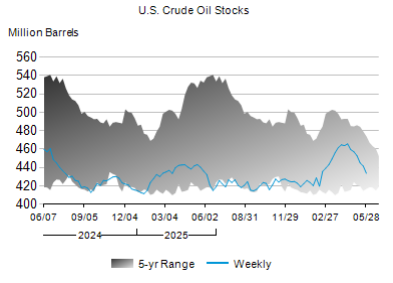
At the same time, product inventories moved in the opposite direction. The EIA reported a gasoline build of 3.4 million barrels and a distillate build of 1.5 million barrels, while Reuters had expected draws in both categories. That build in refined products may be helping limit some of the upward pressure from the larger crude draw.
Demand also provides some balance. Slower Chinese demand has helped temper rising prices, with Iranian oil prices slipping into discounts for the first time since April and Russian crude premiums easing as sellers try to attract Chinese buyers. That weaker demand signal is one reason prices are not moving higher despite tight inventories and ongoing geopolitical risk.
Hopes for a ceasefire and broader U.S.-Iran agreement are pressuring prices lower, while restricted flows through the Strait of Hormuz, low U.S. inventories, and continued military risks are keeping the market cautious.
This article is part of Daily Market News & Insights


MARKET CONDITION REPORT - DISCLAIMER
The information contained herein is derived from sources believed to be reliable; however, this information is not guaranteed as to its accuracy or completeness. Furthermore, no responsibility is assumed for use of this material and no express or implied warranties or guarantees are made. This material and any view or comment expressed herein are provided for informational purposes only and should not be construed in any way as an inducement or recommendation to buy or sell products, commodity futures or options contracts.