
Fleet Management in 2026: Where Are the Gaps and What Can Be Done About Them?
Fleet operations are increasingly complex, and with that complexity comes pressure on costs, uptime, and day-to-day decision-making. The latest Fleet Benchmark 2026 Report, built on feedback from more than 600 fleet professionals and supported by operational data, makes one thing clear: while most fleets are keeping up, many are doing so while absorbing inefficiencies that quietly impact performance over time.
Are rising costs being managed or just absorbed?
It is not surprising that 54.4% of fleet managers identify rising costs as their primary concern, given the continued pressure from maintenance expenses, labor constraints, parts availability, and evolving regulatory requirements. What is more telling, however, is how different fleets are responding to that pressure.
Some operations simply react as costs increase, adjusting as needed without a structured approach, while others take a more disciplined approach, focusing on the total cost of ownership rather than just upfront acquisition costs. These fleets are making earlier, data-informed decisions, which allows them to manage cost increases with greater control rather than being forced into reactive spending.
For many fleet owners, the real consideration is not whether costs will continue to rise, but whether current processes are strong enough to handle that reality without creating additional strain on the operation.
Maintenance Strategy
Across the industry, maintenance strategies continue to sit in the middle ground, where planned and unplanned work coexist in ways that are not always efficient. Only a small percentage of fleets operate in a fully scheduled maintenance environment, while the majority are balancing structured preventive work with a steady flow of unexpected repairs.
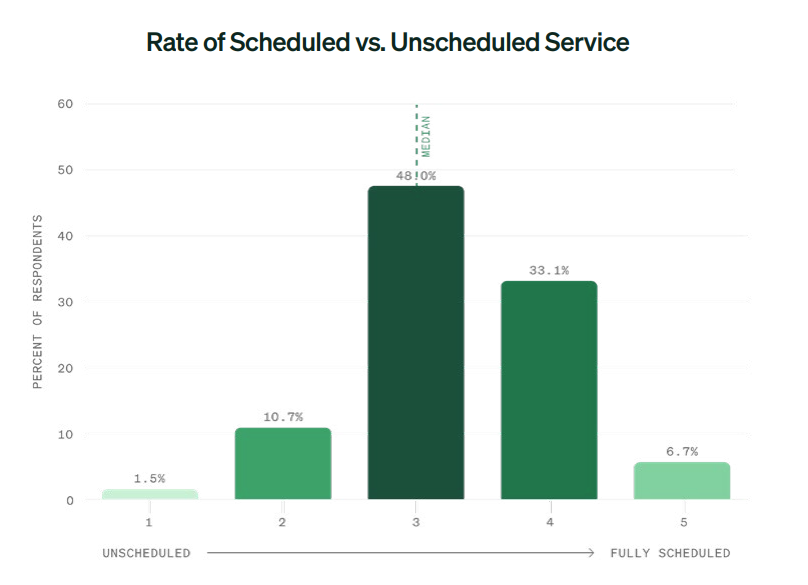
This hybrid approach may feel manageable at the moment, but over time, it introduces friction that affects scheduling, staffing, and asset availability. When maintenance is not consistently planned, even routine issues can escalate into disruptions that ripple across the operation.
First, maintenance response times appear efficient, with an average start time of just over 30 minutes. However, the average time to begin work stretches to nearly a full week, which reveals a deeper issue within fleet operations.
The reality is that most work orders begin promptly, but when exceptions occur, whether due to communication breakdowns, technician availability, or an influx of unplanned repairs, those delays compound quickly. What starts as a single disruption can extend timelines far beyond expectations, ultimately impacting uptime and service reliability.
Technology
According to the report, there is interest in emerging technologies such as artificial intelligence, yet adoption across fleets remains limited. Many organizations are still in the evaluation phase, weighing the potential benefits against concerns around accuracy, reliability, and implementation.
A similar pattern is seen with alternative fuel vehicles, where long-term sustainability goals are present but adoption remains limited due to infrastructure limitations, range constraints, and cost. Rather than broad changes, most fleets are moving forward with targeted decisions that align with operational realities.
What actually separates high-performing fleets?
The most consistent takeaway from the data is that performance is not determined by access to advanced technology or larger budgets. Instead, it is driven by how effectively day-to-day data are managed.
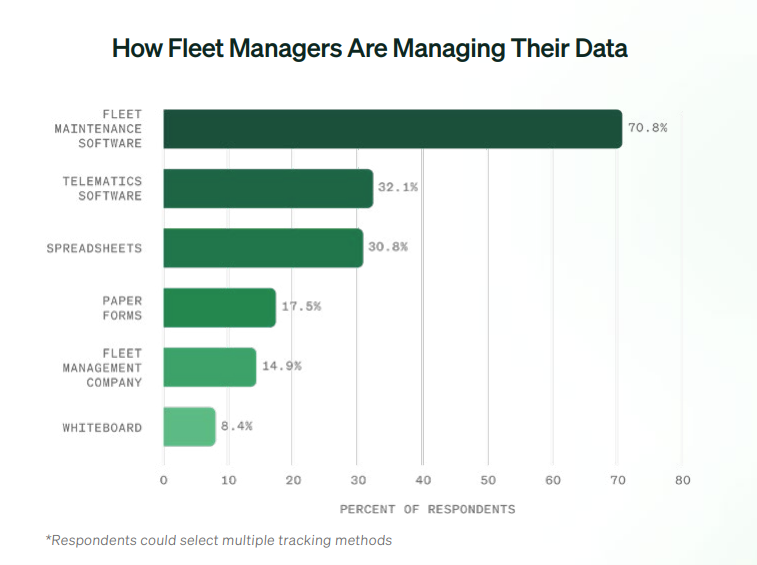
High-performing fleets focus on reducing variability. They plan ahead to minimize unexpected work, prioritize tasks by impact rather than urgency, and rely on data to guide decisions on maintenance and asset replacement. These practices allow them to operate with greater consistency, even when facing the same challenges as their peers.
In contrast, fleets that rely more on reactive processes often face higher costs and more frequent disruptions, despite operating in similar environments.
Biggest opportunity
The findings from the 2026 report suggest that meaningful improvements do not necessarily come from large-scale changes but from addressing smaller execution gaps that accumulate over time.
Strengthening maintenance planning, improving communication across teams, and gaining better visibility into true operating costs are all areas where incremental changes can lead to measurable results. These adjustments may seem simple, but they directly influence uptime, efficiency, and long-term cost control.
For fleet owners, the path forward is less about adding complexity and more about creating consistency. In an environment where challenges are unlikely to ease, the ability to operate with discipline and predictability becomes a defining advantage.
Mansfield Solution: Take Fuel Management to the Next Level
From traditional and renewable fuels to advanced data management tools and price risk management services, Mansfield offers the resources needed to elevate your fuel management to new heights.
FuelNet, Mansfield’s online fuel management platform, provides operational and financial visibility to improve fuel management. Helping you easily track bulk and DEF fueling as well as repair and maintenance, FuelNet gives you one place to control all aspects of fuel management. Embrace the power of modern fuel management and ensure you’re measuring the correct data to drive your fleet operations forward. Get in touch today!
This article is part of Daily Market News & Insights
Tagged: AI in fleet management, alternative fuel vehicles, bulk fuel tracking, CME petroleum market, DEF fueling, fleet benchmark 2026 report, fleet data management, fleet downtime reduction, Fleet Efficiency, fleet maintenance strategy, fleet management 2026, fleet management gaps, fleet operations, fleet scheduling, fleet staffing, Fleet Sustainability, fleet technology, fleet uptime, fleet visibility tools, Fuel Management, fuel management platform, high-performing fleets, petroleum market outlook, preventive maintenance, Price Risk Management, rising fleet costs


MARKET CONDITION REPORT - DISCLAIMER
The information contained herein is derived from sources believed to be reliable; however, this information is not guaranteed as to its accuracy or completeness. Furthermore, no responsibility is assumed for use of this material and no express or implied warranties or guarantees are made. This material and any view or comment expressed herein are provided for informational purposes only and should not be construed in any way as an inducement or recommendation to buy or sell products, commodity futures or options contracts.