
Winter Storm Fern: Impacts Still Being Felt
Winter Storm Fern delivered a significant blow to much of the United States last weekend, impacting hundreds of millions of people and stretching more than 2,000 miles from New Mexico to Maine. Heavy snow and ice covered large portions of the South, Midwest, and Northeast, triggering widespread travel disruptions and leaving more than one million customers without power at its peak.
The storm also proved deadly, with at least 30 weather-related fatalities reported nationwide. Extremely cold temperatures followed the system, locking in icy conditions and slowing recovery efforts in many areas. Click here to learn more about how to recover after the storm
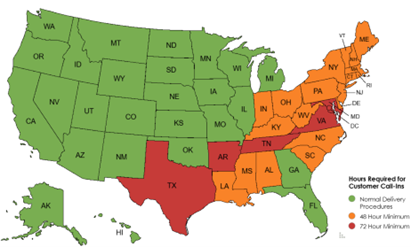
While some markets are beginning to reopen, others are still offline due to road hazards. Even where carriers are beginning to mobilize, delays may occur due to the icy roads and heavy demand. Mansfield deliveries remain on Code Red in Texas, Arkansas, Tennessee, Washington, D.C., Maryland, and Virginia, requiring 72-hour notice for new requests. Mansfield remains on Code Orange in Louisiana, Mississippi, Alabama, South Carolina, North Carolina, Pennsylvania, West Virginia, Indiana, Kentucky, Ohio, Delaware, New Jersey, New York, Connecticut, Massachusetts, Rhode Island, Vermont, New Hampshire, and Maine, requesting a 48-hour notice.
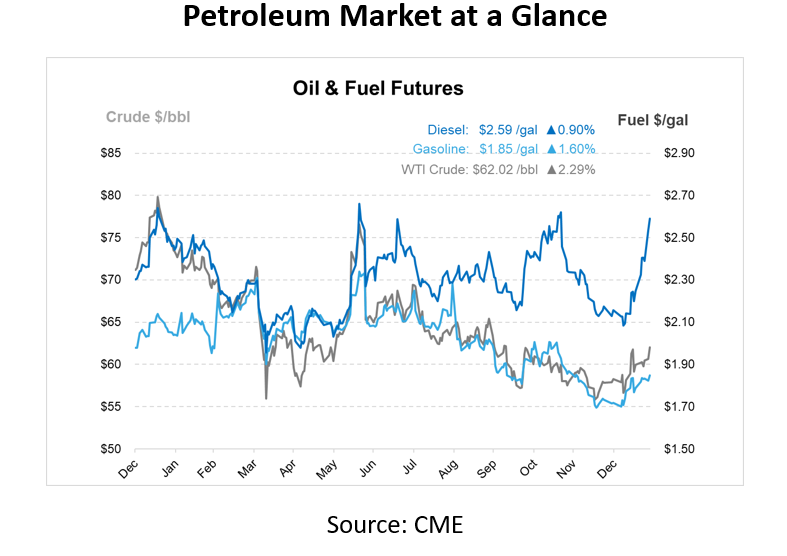
Energy infrastructure across the U.S. felt the strain as well. Analysts estimate that crude oil production losses reached as much as 2 million barrels per day, roughly 15% of national output, over the weekend. The Permian Basin accounted for the largest share of shut-ins, with production outages peaking on Saturday before gradually easing. By early this week, most curtailed production was already coming back online, with full restoration expected by the end of the week.
Another Round of Winter Weather Possible
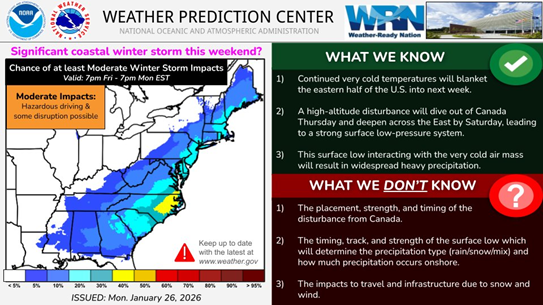
As recovery from Winter Storm Fern continues, attention is turning to another storm system that may be developing late this week. Forecasts indicate that a new East Coast storm could intensify into a nor’easter or bomb cyclone this weekend, with the potential for heavy snow, strong winds, and coastal flooding from the Carolinas to New England.
This possible upcoming storm is fundamentally different from Winter Storm Fern. Cold air is expected to drop south from Canada all the way into Florida, while a separate low-pressure system develops offshore as a Nor’easter. How that Nor’easter strengthens, and where it ultimately tracks, remains uncertain.
Nor’easters are powerful winter systems often described as “winter hurricanes.” They form as strong low-pressure systems along the East Coast, producing intense winds and heavy precipitation. When that moisture interacts with entrenched cold air, rain can quickly transition to snow or mixed winter precipitation.
Winter Additives
Widespread cold weather, with temperatures dropping into the low teens or single digits, can cause diesel fuel to gel. In northern states, diesel fuel is often treated by default; in the south, however, treatments may vary.
If you’re unsure whether your fuel is being treated with winter additives and/or kerosene, or want to restock your winter additives supply, make sure you speak with your account representative as soon as possible.
Mansfield strongly recommends keeping cold-flow additives (such as ColdPRO, Hot Shot Winter Defense, and Howes Diesel Treat & Anti-Gel) as well as an emergency reliquifier (such as Diesel 9-1-1) on site for emergency situations.
Mansfield customers can order winter additives by emailing additives@mansfieldoil.com. Delivery timelines will depend on current road conditions and typically require approximately two days for ground transportation, depending on the region. Additionally, due to a sudden surge in demand for winter additives, some products may be temporarily unavailable at the time an order is placed.
In the short term, these products can often be purchased at local automotive or truck supply stores. Note that cold-flow additives can be added as a preventive measure, while reliquifiers like Diesel 9-1-1 should only be used in response to gelled fuel.
This article is part of Daily Market News & Insights
Tagged: cold flow additives, commercial fuel supply, crude production outages, diesel anti-gel, diesel fuel gelling, east coast winter storm, emergency reliquifier, nationwide winter storm impacts, nor’easter forecast, Power Outages, severe winter weather, snowfall and ice storm coverage, storm preparation, storm recovery tips, winter additives, winter fleet management, winter fuel treatments, winter storm fern


MARKET CONDITION REPORT - DISCLAIMER
The information contained herein is derived from sources believed to be reliable; however, this information is not guaranteed as to its accuracy or completeness. Furthermore, no responsibility is assumed for use of this material and no express or implied warranties or guarantees are made. This material and any view or comment expressed herein are provided for informational purposes only and should not be construed in any way as an inducement or recommendation to buy or sell products, commodity futures or options contracts.