
Why California Leads the Nation in Fuel Prices
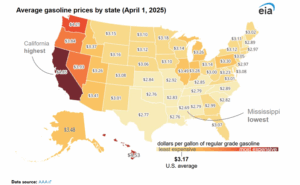
California drivers regularly face the steepest fuel prices in the continental U.S., often paying over a dollar more per gallon than the national average. According to the U.S. Energy Information Administration (EIA), several factors drive these elevated prices, ranging from state taxes and environmental mandates to supply chain constraints unique to California.
Taxes make up a significant portion of California’s gasoline prices. The EIA notes that, as of March 2025, drivers in the state paid around $0.90 per gallon in total taxes and fees. This figure includes:
- Federal tax: $0.18/gal (uniform across all states)
- State excise tax: $0.60/gal
- State sales tax: $0.10/gal
- Underground storage tank fee: $0.02/gal
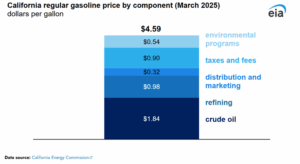
In comparison, the average state gasoline excise tax across the U.S. is $0.28/gal, making California’s nearly double the national average.
Environmental Costs Add Another Layer
Beyond taxes, environmental regulations contribute heavily to retail fuel costs. California’s Cap-and-Trade Program and Low Carbon Fuel Standard impose additional expenses on fuel suppliers. These programs are designed to lower emissions and reduce the carbon intensity of fuels, but the associated compliance costs can add as much as $0.54 per gallon, according to estimates from the California Energy Commission.
California also requires a unique formulation of gasoline designed to burn cleaner and reduce smog. While this cleaner-burning fuel benefits air quality, it is more expensive to produce. The fuel requires specialized blending components and processing steps, which most U.S. refineries do not perform. As a result, California must rely heavily on in-state refiners capable of producing this special blend.
Limited Access to Broader U.S. Fuel Markets
Geography and infrastructure also play major roles in California’s high fuel prices. Unlike other states, California cannot receive gasoline from the U.S. Gulf Coast via pipeline due to the Rocky Mountains and limited pipeline capacity. This isolation means the state primarily depends on its own refining capacity or costly imports from countries like India and South Korea. However, high shipping costs and stringent fuel specifications limit the volume and frequency of these imports.
Supply Volatility from Refinery Dependence
California’s refining infrastructure is also less robust than it once was. Several in-state refineries have closed in recent years, and more closures are expected. With fewer facilities producing fuel, any maintenance issue or unplanned outage can significantly disrupt the supply. West Coast refineries also tend to maintain lower inventory levels than the national average, further amplifying price spikes when disruptions occur.
While environmental regulations and special fuel blends contribute to cleaner air, they also raise costs. Add in the highest state taxes in the nation and limited access to alternate fuel supplies, and it’s clear why Californians often pay significantly more at the pump than drivers in other states.
This article is part of Daily Market News & Insights


MARKET CONDITION REPORT - DISCLAIMER
The information contained herein is derived from sources believed to be reliable; however, this information is not guaranteed as to its accuracy or completeness. Furthermore, no responsibility is assumed for use of this material and no express or implied warranties or guarantees are made. This material and any view or comment expressed herein are provided for informational purposes only and should not be construed in any way as an inducement or recommendation to buy or sell products, commodity futures or options contracts.