
The Fuel Equation Behind Data Center Reliability
Data centers are the backbone of the digital economy, housing vital infrastructure for cloud computing, storage, and communications. Even a brief power interruption can lead to service disruptions, data loss, and financial consequences. To ensure uptime, data centers rely heavily on backup generators, which are almost always powered by diesel fuel due to their high energy density, reliability, and long shelf life.
When a power outage occurs, diesel-powered generators take over within seconds to supply electricity to critical servers and cooling systems. Depending on the facility size, a data center may consume thousands of gallons of diesel each day during extended outages. These systems are often configured in parallel, with multiple units running in tandem to provide uninterrupted power on a scale.
To ensure readiness, many data centers implement:
- On-site fuel storage: Tanks with diesel reserves are maintained on-site to provide immediate generator fuel in case of grid failure.
- Automated fuel transfer systems: Pumps and pipelines move diesel from storage to generators with minimal delay, ensuring consistent performance.
A Case Study in Scale
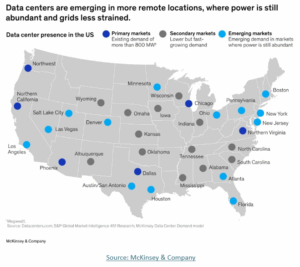
Northern Virginia is home to more than 300 data centers, representing one of the highest concentrations of digital infrastructure in the world. In 2024, their combined power consumption reached 4,140 megawatts. If the grid were to go down, meeting that power demand through generators would require:
- 40 fuel trucks per hour to deliver enough diesel
- Nearly 7 million gallons of diesel per day to keep operations running
This massive consumption underscores the importance of proactive fuel planning and logistics coordination for large-scale data center regions.
Generator Maintenance and Fuel Planning
A data center’s emergency power plan is incomplete without ongoing maintenance and fuel management. Regular generator servicing, load testing, and fuel quality checks are essential to keep systems running reliably. Poor fuel quality or lack of preventive maintenance can lead to generator failure just when it’s needed most.
Mansfield offers specialized generator services and can coordinate with fuel suppliers to ensure both equipment and fuel supply are maintained at optimal readiness. From routine inspections to full-scale emergency response planning, Mansfield helps data centers stay prepared for any power disruption.
Leading Causes of Generator Failure
Generator failure is often linked to inadequate fuel system maintenance. When fuel is not properly managed, several issues can arise that compromise reliability. Common causes of failure include:
- Lack of fuel availability – Often caused by outdated inventory controls or lack of delivery coordination.
- Logistics and delivery challenges – Limited access or overwhelmed suppliers during emergencies can delay fuel replenishment.
- Inadequate storage capacity – Storage that doesn’t align with fuel consumption rates can lead to shortages during prolonged outages.
- Fuel contamination – Issues such as microbial growth, tank sludge, residue, wax buildup, and ice formation degrade fuel quality and clog fuel systems.
- Fuel spoilage – Water contamination, tank corrosion, and improper stabilization from weather exposure or aging fuel all reduce performance.
Emergency Plan
Diesel supply reliability is as important as the generator itself. During natural disasters, fuel supply chains may be strained, making it difficult to secure deliveries on short notice. To address this, data centers establish long-term partnerships with trusted fuel providers. These providers offer emergency delivery guarantees, prioritize critical accounts during supply disruptions, and enable real-time tracking and inventory monitoring to ensure uninterrupted operations. These relationships are vital in disaster scenarios when power restoration timelines are uncertain and demand for generator fuel spikes.
A data center’s emergency power plan is incomplete without ongoing maintenance and fuel management. Regular generator servicing, load testing, and fuel quality checks are essential to keep systems running reliably. Poor fuel quality or lack of preventive maintenance can lead to generator failure just when it’s needed most.
Working with a Reliable Partner
Mansfield offers specialized generator services and can coordinate with fuel suppliers to ensure both equipment and fuel supply are maintained at optimal readiness. From routine inspections to full-scale emergency response planning, Mansfield helps data centers stay prepared for any power disruption.
A dependable generator system and a robust fuel strategy ensure that data centers can maintain uptime, protect sensitive information, and fulfill service level agreements, no matter what the grid is doing. Contact Mansfield today!
Ready To Learn More about Emergency Response Preparedness?
Click here to tune in to FUELSCast—a Mansfield Energy podcast.
FUELSCast delivers in-depth discussions on the latest trends, challenges, and innovations, shaping the oil and energy industry. Each episode covers key topics, including current events, emerging technologies, market dynamics, and expert insights. Watch the latest episode now on YouTube, Spotify, or Apple Podcasts.
This article is part of Daily Market News & Insights
Tagged: Backup Generators, critical infrastructure, data center reliability, Data Centers, diesel consumption, diesel fuel, diesel fuel logistics, diesel storage, Disaster Preparedness, Emergency Fuel Supply, emergency response, Energy Infrastructure, fuel contamination, fuel delivery, Fuel Logistics, fuel planning, Fuel Quality, fuel strategy, generator failure, generator maintenance, generator servicing, Power Outage, power reliability, tank maintenance, uptime management


MARKET CONDITION REPORT - DISCLAIMER
The information contained herein is derived from sources believed to be reliable; however, this information is not guaranteed as to its accuracy or completeness. Furthermore, no responsibility is assumed for use of this material and no express or implied warranties or guarantees are made. This material and any view or comment expressed herein are provided for informational purposes only and should not be construed in any way as an inducement or recommendation to buy or sell products, commodity futures or options contracts.